
Global
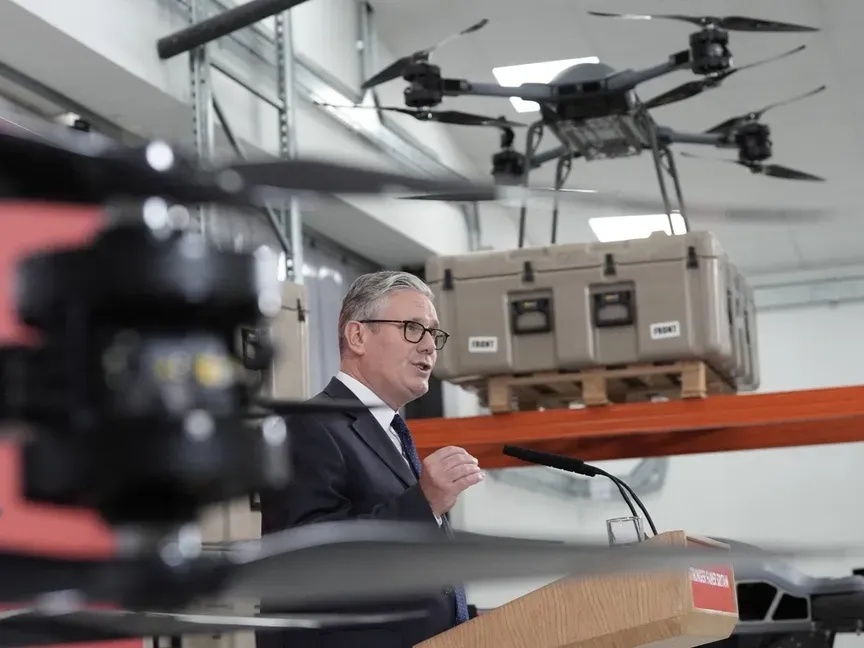
British Prime Minister Keir Starmer announced on Tuesday the launch of a new funding mechanism valued at £50 billion, equivalent to approximately $68 billion, aimed at enhancing army capabilities and supporting the United Kingdom's defense industries. During a press conference, Starmer stated the defense investment plan represents a "decisive measure" undertaken while fully adhering to specified financial rules. He indicated that part of the funding would come from scaling back existing energy projects. Starmer added the new program seeks to help local companies compete effectively in global markets, describing this as the largest expansion in support for British export finance in a century. Starmer clarified the plan's funding would be achieved through redistribution of spending across ministries, alongside reallocating a portion of capital expenditure budgets by one pence from every pound sterling. He affirmed public investment levels would remain at their highest sustainable levels since the 1970s. He considered this decision to reflect "necessary and correct choices to protect the country," emphasizing that "thanks to these difficult decisions, we are now able to increase defense spending." Starmer reported the defense investment plan would raise defense spending by £15 billion. However, this amount remains significantly lower than the range advocated by defense experts and senior military commanders in Britain, which varied between £18 billion and £28 billion. The Prime Minister continued: "We are already implementing the largest sustained increase in defense spending since the 1980s, totaling £270 billion over the next four years, which supports our armed forces and enhances national security." He added: "It is true that the focus is largely on numbers, but before we came to power, two years ago, this country was spending £54 billion annually on defense. We will raise this figure to nearly £80 billion annually by 2029." He explained this increase represents a real growth of 27%, as defense spending will rise from 2.3% of GDP in 2024 to 2.7%, putting Britain on a path to reach 3% during the next parliamentary cycle. Starmer described achieving this goal as needing to be the "top priority in the next spending review." He also stressed the necessity of "spending better," noting the importance of implementing real reforms within the Ministry of Defence to ensure the best return from the country's defense purchases. In a related context, Starmer considered this increase in defense spending would make Britain "ready to fight a war with Russia if necessary." This statement came in response to a question about whether he could "confidently" confirm that the defense investment plan by 2030 would include enough to deter and militarily confront Russia if required. Starmer added: "The increase in defense spending that we approved and announced last year has already come into effect, and it is the largest sustained increase since the 1980s, and the defense investment plan builds upon that increase." He continued: "It's not just about the amount of money, but also about capabilities. We have learned a great deal from Ukraine, and from Iran as well, regarding the capabilities needed to confront countries like Russia." He warned that "the world has become more dangerous," adding that this situation "imposes fundamental questions on all of us—not just about how we respond, but also about our identity as a nation, and what we choose to be. I am confident that retreating inwards and succumbing to the role of a bystander swept away by events is not in our nature."