
Eco
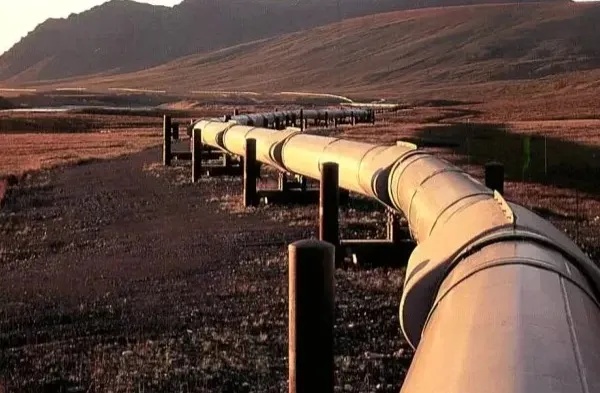
Two informed sources have revealed that Iraq's efforts to export oil through a pipeline traversing Syria, aimed at circumventing any future disruptions in the Strait of Hormuz, are likely to require approximately four years of construction work and an estimated cost of no less than $15 billion. This plan is being promoted by US officials and energy sector executives and has received initial support for feasibility studies from a consortium including Chevron. The initiative is considered part of a broader strategy to reduce the sector's reliance on the Strait of Hormuz, whose effective closure has been impacted by the "Iran war." In a statement last week, US Treasury Secretary Scott Bessent indicated that "within the next two years, the Strait of Hormuz will lose its importance, becoming just another body of water," according to Reuters. Bessent explained that although nearly 20% of the world's oil and liquefied natural gas exports passed through the Strait of Hormuz before the outbreak of the war, "more than 50% or 70%" of those exports would instead be transported via underground pipelines. However, two sources directly involved in the project affirmed that the plans for the Iraq-Syria pipeline would take twice the duration Bessent suggested, owing to the critical need for entirely new infrastructure, and the project may face additional hurdles. The sources requested anonymity due to the sensitivity of the matter. Iraq is considered one of the countries most affected by the closure of the Strait of Hormuz. According to data from the Iraq Oil Marketing Company (SOMO), Baghdad was exporting approximately 3.6 million barrels per day of oil before the war, mostly through Gulf ports near Basra. However, its export volume through the Strait of Hormuz dropped to just 35.5 million barrels last July. There is currently an existing pipeline connecting the Kirkuk fields in northern Iraq to the Syrian port of Baniyas on the Mediterranean Sea. Still, it has suffered significant damage due to wars in Iraq and Syria and has not been used regularly since the 1980s. The two sources stated that the current plan necessitates the construction of entirely new infrastructure rather than merely rehabilitating the existing line, with an estimated cost of no less than $15 billion. One of the sources added that a significant portion of the new pipeline would largely follow the same Kirkuk-Baniyas route, but the intact sections of the old line do not conform to newly adopted specifications, rendering their use impossible. The second source reported that the project involves building a completely new and integrated system of crude oil pipelines, linking the southern and northern fields in Iraq to a collection center in the city of Haditha in western Iraq, and then extending to Baniyas. The United States has welcomed the plans for the "rehabilitation and construction" of the pipeline, noting that its initial crude oil transfer capacity would reach two million barrels per day. This figure represents a significant increase compared to the old pipeline's capacity, which was estimated at around 300,000 barrels per day, less than a tenth of the oil volume Iraq was exporting through the Strait of Hormuz before the "Iran war." Iraq has already resumed oil exports from the Kirkuk fields via a pipeline to the Turkish port of Ceyhan, with a target capacity of about 250,000 barrels per day. The sources indicated that the work on the Iraq-Syria pipeline would take approximately four years, but one added that the timeline might also need to account for the removal of old infrastructure and securing new land usage rights from the new Syrian government. In a related context, Syria and Iraq signed separate memoranda of understanding with a consortium comprising US Chevron, T.I. Capital, and Qatari UCC Holding to conduct technical and financial studies as a preliminary step for the project. The Iraqi Ministry of Oil and the state-owned Syrian Petroleum Company did not respond to requests for comment on the project or the sources' estimates regarding the timeline and cost. T.I. Capital and UCC Holding also did not respond to comment requests. Chevron referred to a previous statement regarding the preliminary agreement, asserting that it does not comment on commercial details. During a press briefing last month, a Chevron executive stated that the project might provide a "new outlet to markets" via the Mediterranean Sea. He added that any new pipeline would also need to connect to the West Qurna 2 and Nassiriya fields in southern Iraq, which Chevron is negotiating to enter. The executive confirmed that Chevron still needs to complete technical studies to determine whether the existing Iraq-Syria pipeline requires rehabilitation, expansion, or reconstruction, clarifying that the company has not yet provided estimates for the project's future export capacity. He concluded by saying, "Pipelines of this type usually do not operate at their full operational capacity from day one."