Local
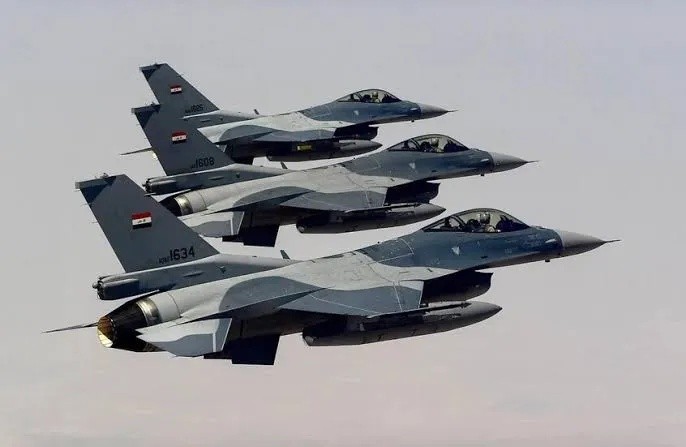
Lieutenant General Pilot Khaled Taimimi, Commander of the Air Force, affirmed that all aerial operations conducted within Iraqi territory are carried out with complete independence from international coalition forces. He emphasized that the Air Force is steadily advancing in developing its capabilities and building its aviation system, noting that maintenance for F-16 aircraft is performed entirely (100%) by Iraqi cadres. Taimimi stated that the Air Force was established on April 22, 1931, and its armament witnessed development linked to Iraq's political relations with global states. After 2003, its activities ceased before being rebuilt and the Martyr Mohammed Alaa Airbase, formerly known as Al-Muthanna Airbase, was reopened. The Air Force Commander added that Iraq began contracting for modern and advanced aircraft, including F-16s from the United States, T-50s, L-159s, and Sukhoi aircraft from Russia. During the war against ISIS terrorist gangs, the Air Force grew and established new airbases, becoming capable of monitoring Iraq's skies and land with advanced reconnaissance aircraft. During that period, the Air Force conducted 58,822 missions, ranging from transport to reconnaissance and other tasks. Taimimi elaborated that the Air Force destroyed very significant ISIS targets and played a major role in supporting ground forces. He pointed out that the Iraqi air forces include the Air Force, Air Defense, and Army Aviation, and these three forces operate with high coordination. Regarding the independence of missions, Taimimi asserted that all tasks currently carried out by the Air Force are entirely independent of coalition forces, receiving no direct support from them. The force possesses very advanced aircraft, such as the F-16, T-50, and L-159 ground attack aircraft, in addition to armed Cessna reconnaissance planes and drones that have replaced coalition aircraft, being 100% Iraqi with no coalition experts involved. He clarified a distinction between coalition forces and companies providing technical services, noting that these companies operate worldwide for a fee. He mentioned that Iraq is moving towards building an integrated system through workshops, factories, and depots. Taimimi stressed that no international coalition force has conducted any mission within Iraqi territory since the beginning of 2026 until now. Concerning air coverage, Taimimi confirmed that Iraq has an air defense system that ensures comprehensive radar coverage of all Iraqi territories. The Air Force possesses multi-role F-16 aircraft, which can be used for air defense and ground attack purposes. He stated that F-16 aircraft have performed missions for over 10 consecutive days without any external intervention, except for the Commander-in-Chief's office, and all pilots are Iraqi. The Air Force Commander refuted rumors about American maintenance for the aircraft, confirming that all F-16 maintenance is carried out by 100% qualified Iraqi personnel. He explained that engineers who joined service in 2004 have now reached the rank of brigadier general and received extensive training outside Iraq. He added that a certain level of engine repair is referred to the international Pratt & Whitney company, but a significant portion of engine repairs is handled internally in Iraq. Taimimi indicated that the national vision for the Air Force stems from the national security strategy, aiming to continuously build and develop the Air Force, aspiring for it to be larger and hold a distinguished position in the region. He confirmed a daily comprehensive aerial survey of all of Iraq, with the country divided into sectors, and each aircraft surveying a specific area and submitting its reports to the Commander-in-Chief's office through the Army Chief of Staff. He explained that minor violations can occur but are controlled, and any reports are handled within hours. He noted the presence of sleeper cells in remote and rugged areas, yet real missions are executed, affirming that the threat of terrorism is currently very limited thanks to citizen vigilance and the tools possessed by the forces. Taimimi disclosed ongoing negotiations with other countries for advanced aircraft like the Rafale, noting that pilot training can take up to five years. He emphasized that Iraq does not wish to acquire aircraft and stockpile them without a calculated and well-planned strategy. Regarding drones, Taimimi mentioned attempts at local manufacturing and an idea to establish a command for this weapon, confirming that these steps are still in their early stages. Iraq has advanced drones distributed among weapon commands, with their data collected at the Commander-in-Chief's office through the targeting cell. He affirmed that Iraq does not need coordination with neighboring countries for internal missions, except for C-130 transport duties, which are managed through diplomatic correspondence via the Ministry of Foreign Affairs. He noted that a very advanced exercise was conducted at Balad Airbase on April 22, 2025, with the participation of France, Italy, the United States, and Jordan. Another exercise was supposed to take place in France this year but was postponed due to the regional conflict, and F-16 aircraft will cross eight countries to participate in it later, while Rafale aircraft stationed in Jordan participate in monthly exercises with Iraqi forces. Regarding Rafale aircraft, the Air Force Commander clarified that advanced negotiations are underway for these highly sophisticated jets. Initial negotiations focus on acquiring 14 aircraft, noting that they are very expensive compared to F-16s, but are newer and more advanced. Taimimi explained that the air forces comprise the Air Force, Air Defense, and Army Aviation, with Air Defense responsible for detecting hostile targets. There are regulations defining a ten-nautical-mile buffer before the border of a neighboring country and ten nautical miles on the Iraqi side. Upon crossing, an aircraft is considered to have entered Iraqi territory, leading to interrogation and an initial warning from Air Defense, with the Air Force responding with its aircraft. Iraq has armed air-to-air aircraft ready daily for intervention, and pilots remain on standby at their bases, ready at any moment. Regarding an incident involving the shelling of a base in Baghdad, Taimimi stated that, unfortunately, a missile struck an Antonov transport aircraft, setting it on fire and rendering it out of service. He mentioned that the cost of its repair exceeded its purchase price, leading to the decision to decommission it, confirming that the loss of the aircraft is significant and not easily replaceable. Taimimi concluded by saying, "No matter how much progress we achieve, we must keep pace with development through conferences and sending pilots to advanced courses." He affirmed that Iraq possesses a fully integrated Air Force college and qualified F-16 instructors.