policy
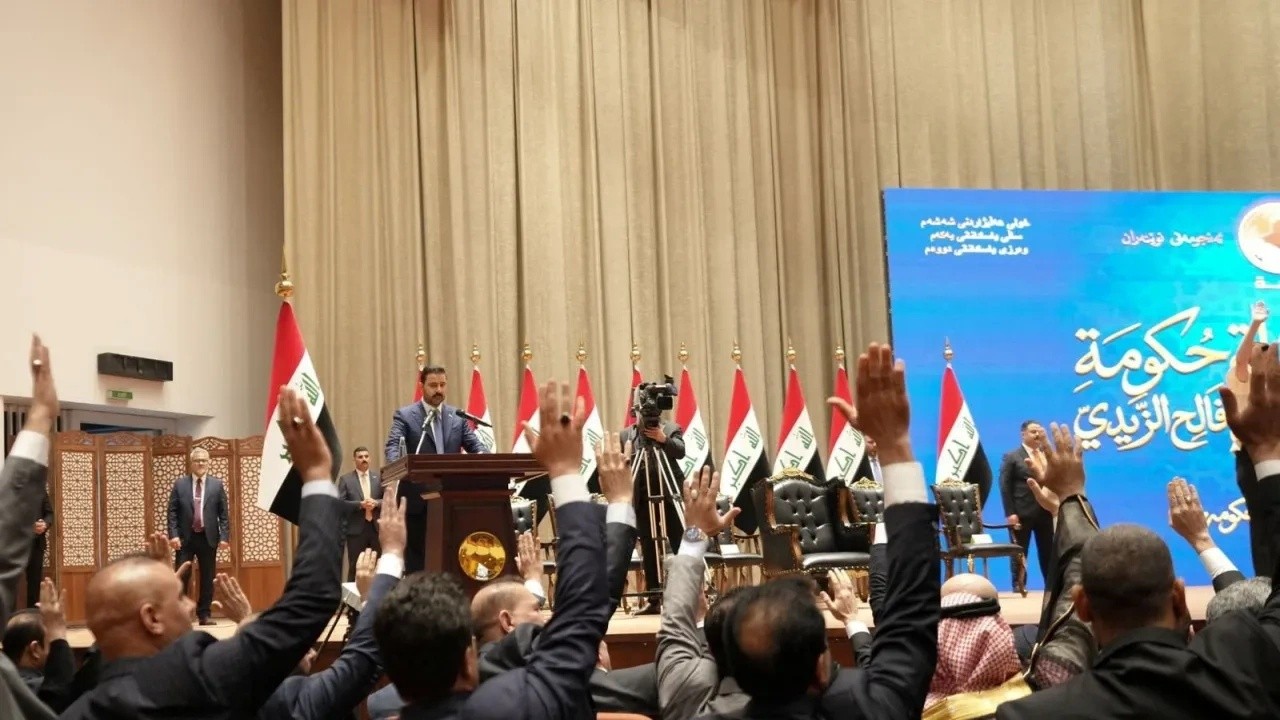
Iraqi Prime Minister Ali Al-Zaidi appointed Laith Al-Khazali as Deputy Prime Minister following extensive negotiations focused on disarming armed factions in the country. This appointment is part of Al-Zaidi's efforts to change the U.S. stance on the decision, based on the idea of rewarding factions that agree to disarm, aiming to encourage more factions to take similar steps. Al-Zaidi sent messages to the U.S. side through the special envoy to Iraq and Syria, Tom Barrett, indicating that opposing Al-Khazali's appointment could negatively affect his efforts to persuade other factions to surrender their weapons. He stressed to U.S. officials the necessity of rewarding those who give up arms to attract as many factions as possible, a message Barrett conveyed to U.S. officials, resulting in approval of the appointment. Meanwhile, the U.S. State Department expects the Iraqi government to fulfill its commitments related to combating terrorism and preventing attacks inside Iraq or originating from it, as well as building a partnership that serves the interests of both countries. Laith Al-Khazali is the brother of Qais Al-Khazali, secretary-general of Asa'ib Ahl al-Haq, designated by the U.S. as a foreign terrorist organization since 2020. Laith was arrested in 2007 over accusations related to an attack targeting U.S. forces in Karbala, before being released in 2009. The U.S. Treasury imposed sanctions on him in 2019 due to his leadership role in Asa'ib Ahl al-Haq and allegations of human rights violations. Asa'ib Ahl al-Haq was among the first factions to announce the start of disarming and handing over weapons to the state months ago, with no recent attacks linked to U.S. interests, unlike other factions that carried out attacks targeting U.S. interests in Iraq and the region. Al-Zaidi completed his government, which began its duties five months ago, after parliamentary approval of appointing 11 ministers and three deputy prime ministers, including Al-Khazali. In a related context, an agreement was reached with Asa'ib Ahl al-Haq to grant them the deputy prime minister position in exchange for their commitment to participate in efforts to centralize weapons under state control, despite initial U.S. objections to Al-Khazali's appointment. U.S. envoy Tom Barrett described the faction's announcement of disarming as an important step toward restoring sovereignty and consolidating stability. Security and foreign policy professor Muhannad Al-Janabi viewed Al-Khazali's appointment as an attempt to reassure Asa'ib Ahl al-Haq and its political bloc amid ongoing debates about disarmament. He noted that the deputy prime minister position may grant the faction influence over government decisions despite lacking independent executive powers. The U.S. chargé d'affaires in Baghdad previously conveyed to Al-Zaidi the Trump administration's rejection of armed factions participating in the current government even if they declare disarmament. Sources confirmed that Washington requires a trial and monitoring period to verify dismantling of the military and economic structures of factions and ending their organizational ties that grant them autonomy from state institutions. Al-Zaidi informed the U.S. side of his desire to give the negotiation process with armed factions a genuine chance, fearing that any sudden escalation could lead to a wide security crisis affecting internal stability and Iraq's economy.