Global
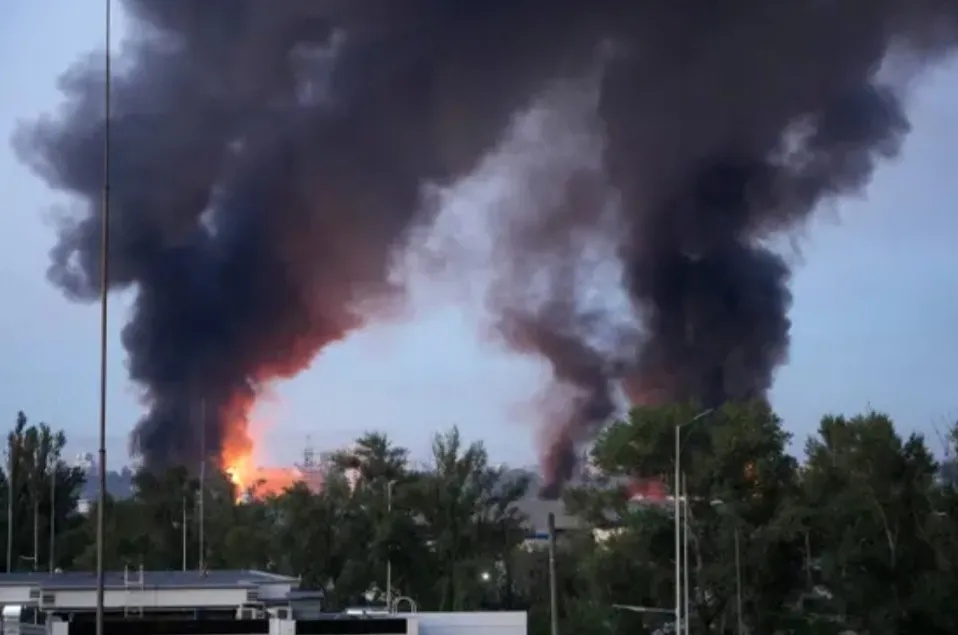
Russia has affirmed its resolve to "continue exerting pressure" on Ukraine following what has been described as the fiercest attack since the conflict began, asserting that its military operations have achieved field gains and intercepted hundreds of Ukrainian drones in recent hours. Kremlin spokesman Dmitry Peskov stated that his country "will continue to increase pressure on the Kyiv regime to achieve the specified objectives," in response to European Union discussions about a new package of sanctions against Moscow. The Russian declaration came hours after a widespread aerial assault targeted the Ukrainian capital, Kyiv, resulting in the deaths of at least 17 people and injuring dozens, according to Ukrainian authorities. The city's mayor described it as "the largest attack on the capital since the start of the war." Multiple explosions rocked buildings across the capital throughout the night, prompting thousands of residents to rush to shelters and subway stations for safety. For its part, the Ukrainian Air Force announced that Russian forces launched 74 missiles and 496 drones during the attack. While air defense units managed to shoot down most of them, 25 ballistic missiles and 12 drones struck 33 different locations. Conversely, the Russian Ministry of Defense reported that its air defense systems shot down 11 guided aerial bombs and 631 Ukrainian drones over the past twenty-four hours, describing it as one of the largest air attack interception operations since the conflict began. The ministry confirmed that Russian forces continued their offensive operations on several fronts, noting that assault units belonging to the "Southern" forces group are close to completing the clearance of Konstantinovka city in the Donetsk Republic from remaining Ukrainian formations. Moscow also indicated that the total losses of Ukrainian forces on various combat axes amounted to approximately 1,465 soldiers within 24 hours, distributed across the northern, western, southern, central, eastern, and Dnieper fronts. Concurrently, military aviation, attack drones, missile forces, and artillery targeted long-range Ukrainian drone launch sites, in addition to transport infrastructure facilities and temporary deployment areas for Ukrainian forces and what it termed "foreign mercenaries" at 153 locations. Furthermore, the Russian Ministry of Defense announced that its Black Sea Fleet forces destroyed a Ukrainian unmanned boat in the northeastern part of the Black Sea. In response, Ukraine urged its allies to bolster its defensive capabilities following the extensive attack on Kyiv. President Volodymyr Zelensky called on the United States to grant his country a license to locally manufacture "Patriot" missiles, emphasizing that strengthening air defenses is the most crucial way to halt repeated Russian attacks. These military developments coincided with European moves to increase pressure on Moscow, as the European Union's foreign policy chief, Kaja Kallas, announced her intention to propose new sanctions targeting entities supporting Russia's military-industrial complex. Moscow, for its part, asserted that these sanctions would not alter the course of its military operations. Meanwhile, Kyiv Mayor Vitali Klitschko declared Friday a day of public mourning in the capital following the major Russian assault that left dozens dead and wounded. Klitschko explained that the damage affected various parts of the city, home to approximately three million people, noting the destruction of several residential buildings. As Thursday dawned, rescue teams continued their efforts to search for survivors amidst the rubble of a nine-story residential building located on the left bank of the Dnieper River, which divides the capital. Fires had erupted in scattered areas around the damaged building. City officials reported an increase in the number of injured to around 90 people, including children, paramedics, and ambulance drivers, confirming that a number of residents remain trapped under the rubble of damaged residential buildings. During this time, subway stations were crowded with numerous residents who sought refuge there, bringing their children, belongings, tents, and pets in search of a safe haven.