Local
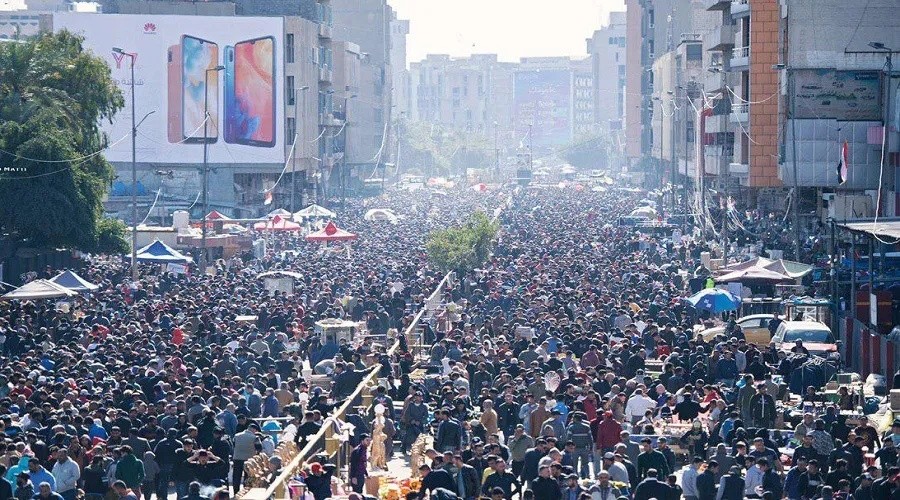
The Ministry of Planning announced on Monday that Iraq registers up to 1.25 million births annually, alongside a decline in fertility rates and an improvement in human and economic development indicators. The ministry noted that over 70 percent of Iraqi families own their homes, affirming an overall enhancement in various service sectors despite economic challenges. Undersecretary of the Ministry, Maher Hammad Jouhan, told the official agency that the census and the preceding economic and social survey revealed a significant improvement in several indicators, leading to the issuance of the Iraqi Human Development Report. Jouhan added that the general situation, despite a pressing economic crisis, is witnessing an improvement in development indicators across the country—economically, socially, and in various service sectors—by the end of 2025. These indicators include a rise in average life expectancy, improved services, and a decrease in disease-related deaths. Census results also showed that over 70 percent of families own their private residences, while approximately 30 percent are renters. Jouhan clarified that the prevalent perception of a housing crisis does not fully reflect reality, as the number of housing units is close to the number of families in the country, although challenges remain concerning the age of some housing units and the presence of informal settlements. He stated that infrastructure indicators in the governorates, particularly in the water, sewage, and road sectors, have shown relative improvement, emphasizing that while this progress does not represent the desired ambition, it is a positive sign. Regarding demographic indicators, Jouhan explained that the census indicated a decline in the population growth rate, deeming this downturn a positive indicator concerning the state's capacity to provide services. He also noted that the decrease in fertility is linked, among other factors, to the rising cultural and educational levels of women and changes in some social concepts related to family size and early marriage. The Undersecretary affirmed that the decline in fertility and the stabilization of the growth rate do not signify a halt in population growth. He pointed out that Iraq still records high regional growth rates, which poses a challenge to the provision of essential services. Iraq witnesses the birth of approximately one million to one and a quarter million citizens annually, and this population increase necessitates proactive planning to provide schools, health centers, housing units, and other vital services. Jouhan added that reaching higher population levels in the coming years will increase the demand for housing units. He indicated that an increase of about 1.25 million people, with an average family size of five to six individuals, could mean a need for approximately 200,000 additional housing units. Concerning the total population, Jouhan reported that Iraq's current population stands at 46,118,793 individuals. He noted that the distribution between males and females is very close, with males outnumbering females by only about 50,000, reflecting a demographic balance between the sexes. He projected that Iraq's population would surpass the 50 million mark by 2030, according to population projections, emphasizing the need to enhance planning for services, housing, and infrastructure to accommodate this anticipated increase.