policy
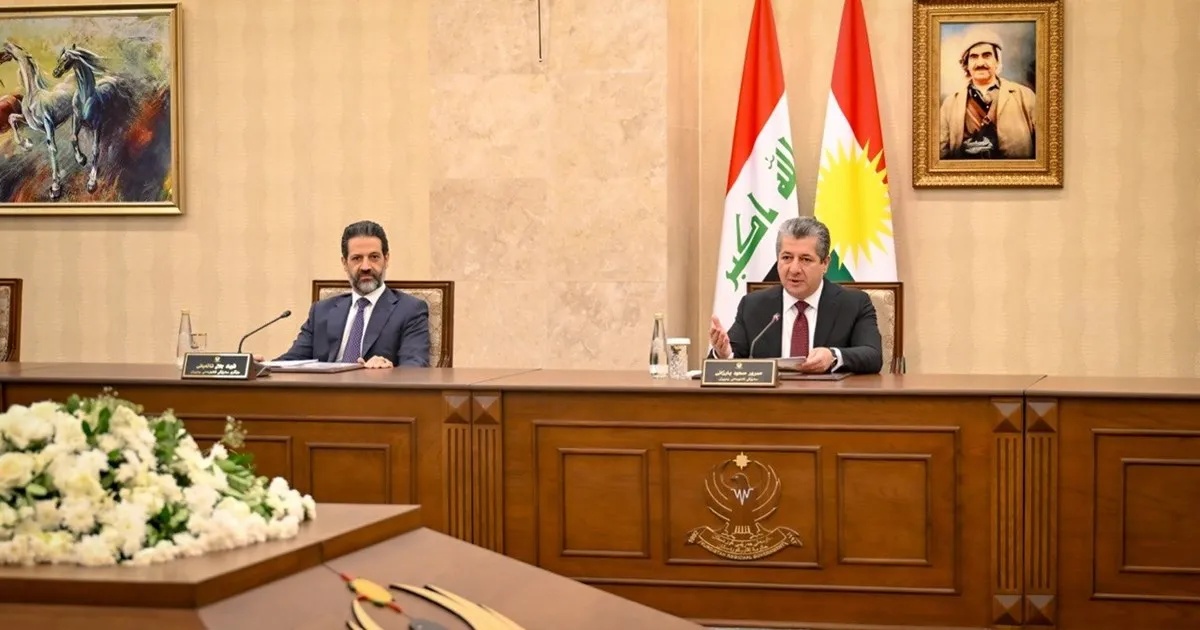
The Kurdistan Regional Government's Council of Ministers approved on Wednesday a proposal to form a high ministerial body for permanent coordination aimed at resolving outstanding issues between the Region and the Federal Government. A statement from the Regional Council of Ministers indicated that the Council held its regular meeting today, Wednesday, chaired by Prime Minister Masrour Barzani and attended by Deputy Prime Minister Qubad Talabani, during which a number of important topics on its agenda were discussed. During the first item on the agenda, the Prime Minister highlighted the outcomes of his recent visit to the capital Baghdad, emphasizing the importance of charting a clear roadmap for continued negotiations on pending issues between the Kurdistan Region and the federal government. In this regard, he proposed the formation of a high-level ministerial body for continuous coordination, comprising relevant ministers and officials from both federal and regional governments. For his part, the Deputy Prime Minister stressed the utmost importance of establishing this body, explaining that this step aims to provide an effective institutional framework for addressing disputes between the Region and the Federal Government, which will positively support efforts to resolve issues between the two sides. Following extensive discussion and exchange of views on the details and mechanism of the proposed body's formation, the Council of Ministers approved the proposal and decided to refer it to the Federal Government for a joint decision on the matter. In the second agenda item, the Council reviewed the latest developments concerning the oil file with the Federal Government and the outcomes of the recent meeting involving the Region's delegation, representatives of oil companies, the Prime Minister, and relevant federal government entities. The Acting Minister of Natural Resources and members of the negotiating delegation provided detailed accounts of their meeting. The Council affirmed the Kurdistan Region's supportive stance towards the new Federal Government, headed by Ali al-Zaidi, in confronting and overcoming the financial challenges facing Iraq due to current regional circumstances. It also instructed the Minister of Natural Resources and the negotiating delegation to accelerate necessary procedures to commence, as soon as possible, achieving the highest levels of oil export to global markets via the Kurdistan Region's oil pipeline, depositing the generated revenues into the federal treasury, and continuing collective efforts to ensure the success of all initiatives aimed at increasing state revenues. The Council noted that oil companies are now required to increase oil production and resume exports in the coming days, following reassurances provided by the federal Prime Minister regarding the security of the oil and energy sector in the Region, in addition to a commitment to compensate for any potential losses resulting from attacks targeting energy installations within the Region's borders. The Council of Ministers also discussed the local revenue file, the issue of implementing ASYCUDA system procedures in the Kurdistan Region, the revenue schedule, and the impact of regional conditions and the ASYCUDA system on the significant decline in the Region's general revenues, and its implications for salary payments. The Minister of Finance and Economy presented a comprehensive report on the Kurdistan Region's general revenues during the first five months of 2026. The report clarified that these revenues witnessed a significant decline compared to the same period in 2025, according to the monthly trial balance reviewed by the joint team from the Federal Government's and the Region's financial control boards. Based on these data, the Regional Government calls upon the Federal Government to review the 120 billion Iraqi dinars required to be remitted as a share to the federal treasury, especially after the Region's monthly revenues decreased by over 70% due to war conditions and regional tensions, in addition to the ASYCUDA customs system file not yet being finalized. Regarding the implementation of the ASYCUDA system at the Region's border crossings, the Council emphasized the urgency for the Federal Ministerial Council for Economy to hold an immediate meeting to ratify the preliminary understanding reached between the two parties last April, which aims to activate this system at Kurdistan Region's checkpoints. The Council stressed that resolving this file would directly contribute to increasing border crossing revenues, stimulating commercial activity, and boosting local markets, results that would ultimately benefit the entire Iraqi economy.