policy
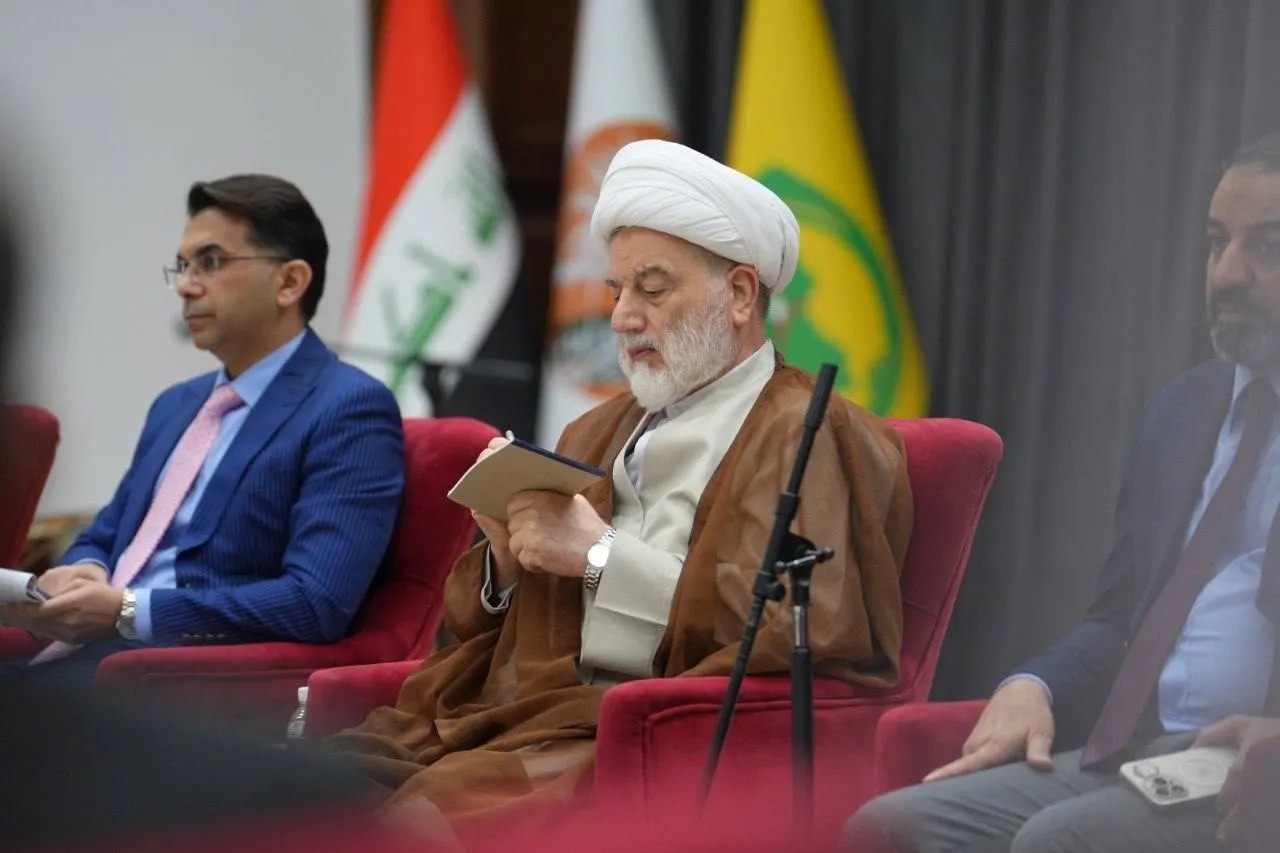
The head of the Supreme Islamic Council, Humam Hamoudi, announced on Saturday that ending foreign presence is an irreversible national and constitutional demand. Hamoudi revealed that September 30 will mark the official launch of the comprehensive and full sovereignty project in the country. In a speech during a dialogue forum held in Baghdad, conveyed by his media office, Hamoudi clarified that "proposing the issue of restricting weapons in a volatile region, amidst ongoing violations of Iraqi sovereignty, and the presence of armed foreign groups hostile to neighboring countries, was a mistake and poses a direct threat to the state's prestige." He added that "the blood of martyrs and the authentic Husseini spirit of our people led to transforming the weapons restriction file from a crisis into a historic opportunity to launch a complete and comprehensive national sovereignty project. This project aims to address all forms of transgression against Iraqi sovereignty from any party." Hamoudi indicated that "restricting weapons is a component within our broader national project, and it will be approached with a realistic vision, understanding, gradual phasing, and a single standard, drawing inspiration from successful global experiences in state-building." He reiterated that "ending foreign presence is an irreversible national and constitutional demand, and that September 30 will be the official declaration for the launch of the comprehensive and full sovereignty project, aiming to build a strong state that enforces its national decision, with the sacrificers playing an effective role in all its aspects." Sheikh Hamoudi called upon "all Iraqi people, including scholars, academics, elites, and masses, to support the full sovereignty project, celebrate the enforcement of national will and state decision, and restore prestige to its institutions." He also pointed to "a clear government direction to enhance the role of the Iraqi army in securing borders and developing air defense capabilities, utilizing all national expertise to advance Iraq's armament capabilities." Hamoudi stated that "the Coordination Framework bears its historical responsibility in leading the state and developing a comprehensive, long-term vision for Iraq's future for at least ten years, with the participation of academics and experts." He noted that "the Framework has begun activating its role by forming three specialized committees: security, economic, and political, whose mission is to formulate future visions, diagnose problems, and conduct field follow-up to support the state's trajectories." He concluded his speech by calling on "all national forces to place popular demands above any partisan or private considerations, and to work on coordinating positions and preserving national cohesion, emphasizing that the parliamentary system cannot succeed without collective action."