Eco
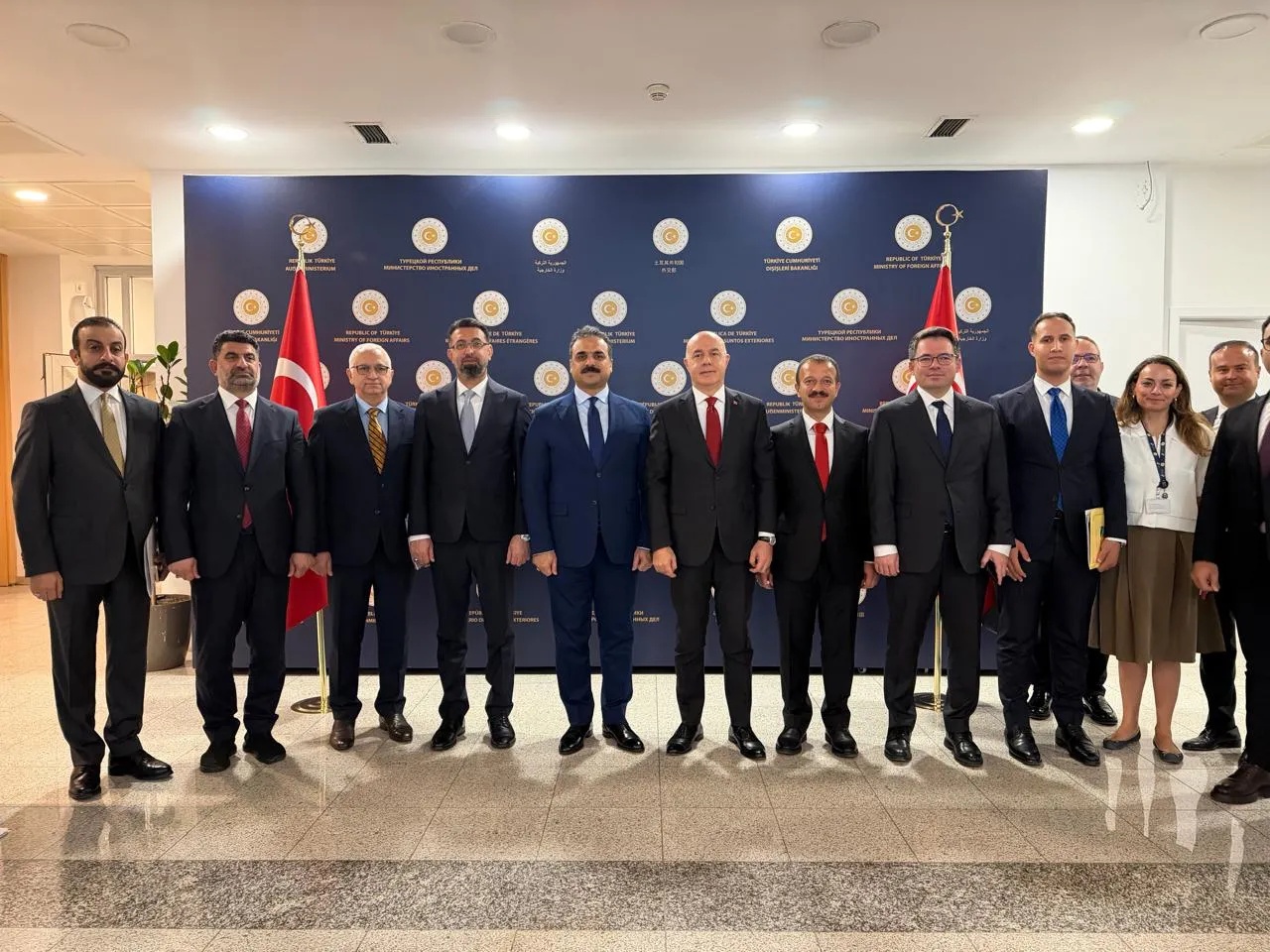
The relevant border crossings authorities announced the activation of the Iraqi-Turkish agreement concerning the Development Road project, affirming their intention to establish a new border crossing at Fishkhabur-Ovakoy and link it to the vital project. A statement issued by the authority indicated that its head, Lieutenant General Omar Adnan Al-Waeli, led the Iraqi delegation during meetings held in Ankara, accompanied by the Director General of Land Transport and the Director General of Railways from the Ministry of Transport. The discussions covered transportation, border connectivity, trade, and transit files, with a particular focus on activating the Fishkhabur-Ovakoy crossing and integrating it into the Development Road project. This step comes within the framework of the Iraqi government's vision aimed at enhancing Iraq's position as a regional and international center for transport and trade. The statement noted that the meeting aimed to translate bilateral agreements with neighboring countries into executive programs and tangible projects, especially since the activation of the Fishkhabur-Ovakoy crossing is a crucial strategic step to complete the Development Road project and transform Iraq's geographical location into an effective economic power. The Ankara meetings emphasized the great importance of securing Iraq's economy, diversifying its outlets and trade routes, and strengthening its regional interconnectivity. Iraq's geographical location constitutes an economic and strategic strength, and this power will be amplified by connecting ports, roads, railways, and border crossings within an integrated transport system. The Iraqi delegation held bilateral meetings with the Turkish side, in addition to trilateral meetings that included the Syrian side, covering several key axes. The first axis involved the Iraqi-Turkish bilateral meeting dedicated to implementing memoranda of understanding. The Iraqi delegation met at the Turkish Ministry of Transport and Infrastructure building in Ankara with the Director General of Foreign Relations in the Ministry, in the presence of the Director General for Iraq and Iran affairs at the Turkish Ministry of Foreign Affairs, and representatives from the Turkish Presidency and Ministry of Defense. The meeting focused on moving to the executive phase for activating the memorandum of understanding signed in the presence of the Prime Minister during his recent visit to Turkey. This memorandum specifically concerns the Development Road project and the Fishkhabur-Ovakoy crossing. Implementation is based on maps, locations, and routes identified and studied by specialized technical committees in both countries, in line with the strategic trajectory of the Development Road project. This move came based on the memorandum of understanding signed on July 28, 2026, between the Iraqi Ministry of Transport and the Turkish Ministry of Transport and Infrastructure regarding rail and road transport via the Fishkhabur-Ovakoy crossing. The memorandum laid a practical foundation for this route, with paragraph (1) stipulating coordination on a new border crossing to increase the capacity for rail and road transport and develop associated infrastructure. Paragraph (2) emphasized leveraging joint expertise and cooperation between the two sides to expedite the opening of the border crossing, while paragraph (5) established a monitoring mechanism through a joint committee of experts and specialists to oversee the implementation of the memorandum and enhance cooperation between the parties. It was clarified that the Ankara meetings did not aim to establish new understandings but rather to activate existing memoranda of understanding and initiate the necessary procedures to make Fishkhabur-Ovakoy an effective crossing within the transport network that will connect Iraq to Turkey. This comes with direct follow-up from the Prime Minister regarding memoranda of understanding and international agreements, and his keenness to transform these agreements from mere paper documents into measurable and implementable projects that serve the Iraqi economy and establish broad relations with neighboring countries and the region. It was noted that the project experienced delays during previous years, with nearly eight years passing without achieving the required level of executive progress. However, the current phase is witnessing a tangible acceleration in procedures, resulting from governmental will and direct coordination with the Republic of Turkey. The statement emphasized that the activation of the Fishkhabur-Ovakoy crossing is more than just a new border point; it is considered part of a vital and important road that will revitalize the Iraqi economy. This road extends from the southern ports, through the network of railways, roads, and economic zones, reaching the Turkish border, and from there to European markets. Thus, the strategic value of the Development Road for Iraq becomes clear, as a tool for economic diversification, securing trade movement, and maximizing the value of Iraq's geographical location. The statement confirmed that Iraq maintains its other corridors with neighboring countries, which provides it with diverse logistical options and reduces the impact on its economy. The Development Road grants Iraq the ability to diversify access routes to global markets, creates a parallel economic resource, and encourages investment in transport, industry, logistics, and economic services associated with the project. The second axis involved the trilateral Iraqi-Turkish-Syrian meeting, attended by Lieutenant General Omar Al-Waeli and his accompanying delegation. This step is considered an expansion of the scope of discussions and the building of a broader space for regional cooperation. The trilateral meeting focuses on raising the level of trade exchange between the three countries, stimulating transit movement, and providing necessary facilities for the movement of goods and passengers. It also aims to develop coordination mechanisms and information exchange between specialized institutions, thereby contributing to reducing border and logistical obstacles and enhancing the efficiency of trade corridors. It was affirmed that this step represents an important economic dimension, as Iraq's geographical location between the Gulf, Turkey, Syria, Jordan, and Iran gives it the potential to become a central meeting point for trade corridors.