policy
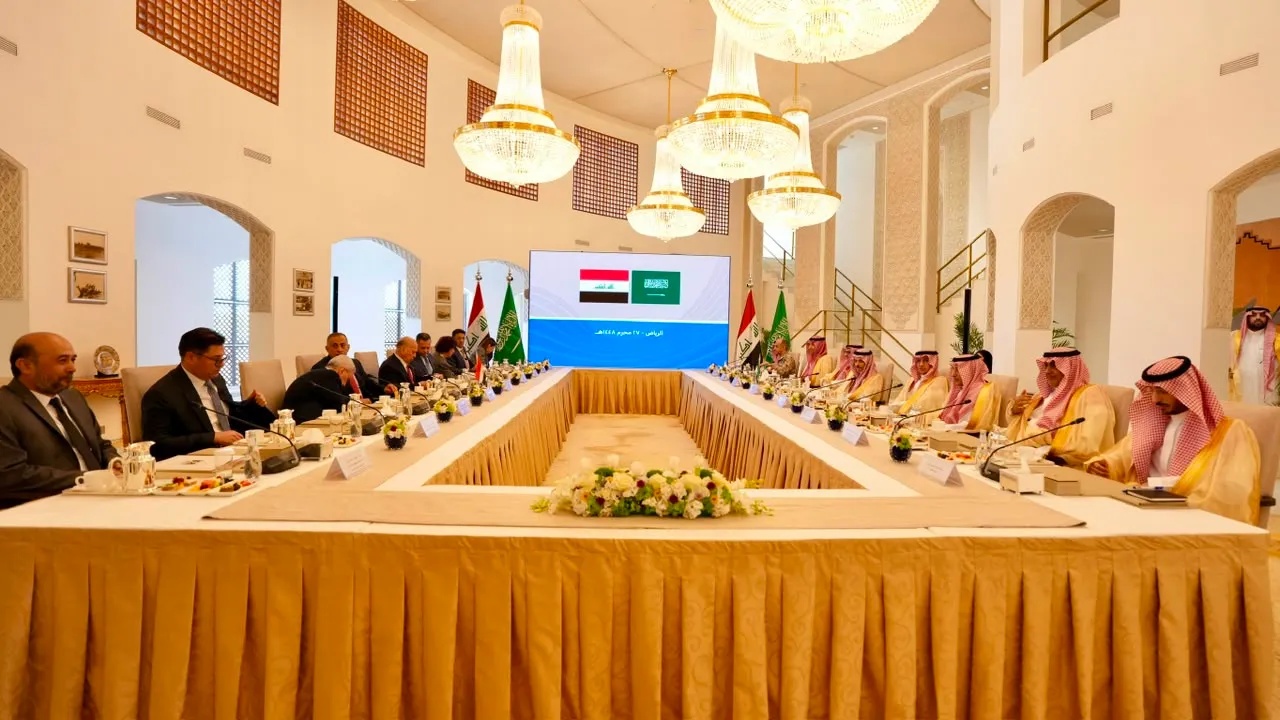
Iraq and Saudi Arabia have unequivocally affirmed their rejection of using any country's territories or airspace to undermine the security and stability of other nations. Both sides reiterated their commitment to supporting Iraq's security, stability, and strengthening the role of its national institutions. This came during a meeting between Iraqi Foreign Minister Fuad Hussein and his Saudi counterpart, Prince Faisal bin Farhan Al Saud, during Hussein's official visit to the Kingdom. Informed sources indicated that the Saudi Foreign Minister welcomed the Iraqi Minister and his accompanying delegation, emphasizing the deep historical and fraternal relations between the Republic of Iraq and the Kingdom of Saudi Arabia. He also highlighted the Kingdom's leadership's keenness to continue developing bilateral cooperation in various fields to achieve the common interests of the two brotherly nations and peoples. The meeting was attended by National Security Advisor Qasim al-Araji and Head of the National Intelligence Service Hamid al-Shatri. For his part, Foreign Minister Fuad Hussein conveyed the greetings of Prime Minister Ali Al-Zaidi and the new Iraqi government to the Kingdom's leadership. He expressed his appreciation for the warm reception and generous hospitality, and lauded the gracious invitation and the frank and constructive dialogue, which reflects a shared will to elevate bilateral relations to broader horizons. The Saudi Foreign Minister stressed that Iraq's security is a fundamental part of regional security, highlighting the importance of preserving brotherly relations between the two countries and preventing anything that could harm them, especially matters affecting security and stability. He also affirmed the Kingdom's desire to enhance cooperation and joint coordination with Iraq to serve the security and stability of the region. The Iraqi Foreign Minister clarified that his country is keen to establish balanced and distinguished relations with all neighboring countries, including the Kingdom of Saudi Arabia. He noted that the repercussions of the recent war cast a shadow over the region and affected the course of these relations, with Iraq being one of the most affected countries by its direct and indirect impacts, including attempts to harm its relations with sisterly nations. Hussein reviewed the most prominent priority files in bilateral relations, foremost among them strengthening economic and investment cooperation, developing partnership in the energy sector, in addition to the importance of intensifying political and security coordination between the two countries. This coordination aims to consolidate regional stability and create suitable conditions for enhancing cooperation that serves the interests of the region's peoples. Prince Faisal bin Farhan, in turn, affirmed that the Kingdom of Saudi Arabia would be supportive of the new Iraqi government, stemming from its keenness to strengthen bilateral partnership and consolidate cooperation to achieve the common interests of the two countries and their brotherly peoples. At the conclusion of the meeting, a joint press statement was issued, in which both sides emphasized the importance of enhancing fraternal relations in various fields and continuing consultation and coordination on regional and international issues of common concern. Both sides stressed the importance of respecting state sovereignty, adhering to the principles of good neighborliness, non-interference in internal affairs, and rejecting the use of any country's territories or airspace to undermine the security and stability of other nations. Iraq also reaffirmed its commitment not to allow its territory or airspace to be used as a launchpad for any actions or attacks targeting the Kingdom of Saudi Arabia, the Gulf Cooperation Council states, or any other regional country, while simultaneously affirming the importance of supporting Iraq's security and stability and strengthening the role of its national institutions, thereby contributing to safeguarding regional security and stability.