

Global
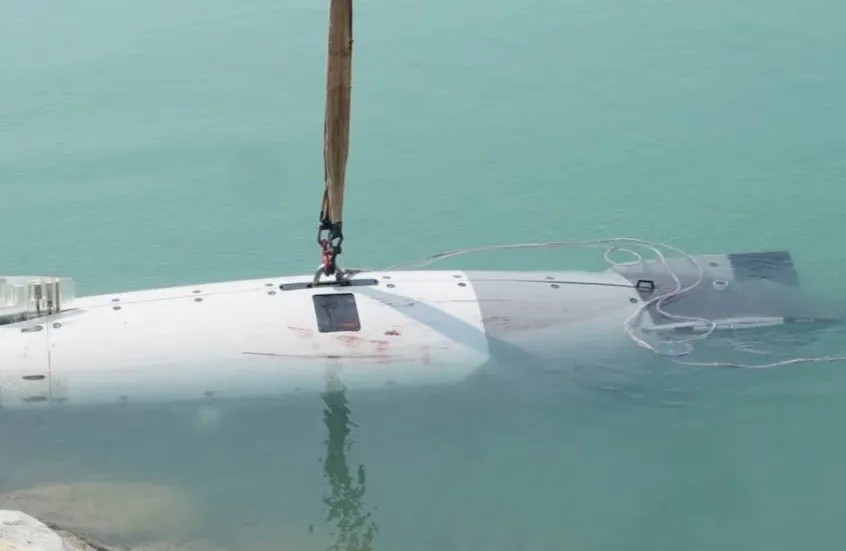
Tehran has announced the commencement of reverse engineering procedures for the U.S. Dive-LD unmanned underwater vehicle, which it recently seized in the Strait of Hormuz. This announcement came from Brigadier General Hossein Mohabbi, spokesperson for the Islamic Revolutionary Guard Corps (IRGC), who confirmed that the vehicle incorporates advanced military technologies and that Iranian specialists will subject it to examination and engineering study. According to the IRGC, this move serves as proof of Iran's capability to handle advanced American military equipment. The IRGC had previously announced its control over the unmanned vehicle, describing it as one of the modern models delivered to the U.S. Fleet in 2025, and stating that its seizure occurred during a "qualitative" operation in the Strait. In response, the U.S. Central Command explained that the autonomous marine vehicle, manufactured by the American company "Anduril," suffered a technical malfunction before Iranian forces recovered it while it was stationary in the water. The U.S. military added that the submarine is an older model and was not collecting sensitive data or carrying classified sonar or radar equipment. The Dive-LD is a large unmanned marine vehicle specifically designed for reconnaissance, surveillance, and long-range underwater operations, capable of operating for days without direct human intervention. Analysts believe that Iran's seizure of the submarine may allow it to examine mechanical components and study certain design features, although the vehicle's software includes protection measures that may limit access to its internal systems. Nevertheless, analysts doubt that the incident will give Iran a decisive military advantage, suggesting it is more likely to represent a propaganda gain for Tehran and an embarrassment for Washington. This incident recalls Iran's previous experience with the U.S. RQ-170 stealth reconnaissance drone, which it captured in 2011, and from which Tehran later announced it developed local models inspired by its design.