
Eco
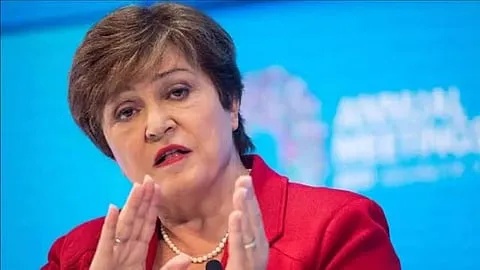
Kristalina Georgieva, the Managing Director of the International Monetary Fund (IMF), has issued a warning that highly advanced artificial intelligence models, such as "Mythos" developed by Anthropic, could be exploited by malicious actors to destabilize the global financial system. Financial regulators worldwide have been on high alert since last April, following Anthropic's announcement of its new Mythos model, which possesses sophisticated cyber capabilities, raising concerns about its potential use in destructive attacks on critical systems. Speaking to journalists in Brussels, Georgieva stated that "Mythos is just the beginning, and more similar models will emerge." She pointed out that leading AI models could be positively utilized to identify "cybersecurity vulnerabilities with unprecedented speed and scope," which could then be used to "address these gaps and protect the financial system from attacks." However, she stressed that "in the wrong hands, this very capability could be exploited to destroy the financial system, and this is what compels us to do more." In the context of interconnected financial systems, Georgieva urged nations to "provide all necessary cybersecurity elements," calling for "greater cooperation" between wealthy and developing countries, as well as between the public and private sectors, to prepare for the potential risks posed by these new models. She noted, "There is no global cybersecurity organization, and given the current geopolitical situation, it is difficult to imagine one." The IMF chief emphasized that advanced economies "must find a way to help developing countries" protect themselves from the threats of these models, given the deep interconnectedness of the global financial system. She added, "If a major loophole exists, it will be exploited; the world is interconnected, and financial systems are interconnected." She also called on countries to consider the high costs of strengthening their cyber defenses, stating, "Recognize that reforms are costly. Ensure adequate fiscal space, and that this is prioritized in public spending... Are you providing the necessary resources?" Georgieva also highlighted the risk of a potential AI bubble bursting and its catastrophic implications for the global financial system. She remarked, "We could also see the enthusiasm for AI and its boom turn into a bust... We don't consider this a high probability, but it's not zero. So it falls into the category of low-probability, very high-impact risks." Georgieva is currently in Europe to present the IMF's annual economic assessment for the Eurozone, which concludes that the region's outlook is "weak" due to the ongoing conflict, increasing risks towards lower growth and higher inflation. A document outlining the preliminary findings indicates that economic growth in Europe is projected to reach 0.9% in 2026 and 1.2% in 2027, a decrease of 0.5 and 0.2 percentage points, respectively, from pre-conflict estimates. Inflation is expected to rise, with the IMF forecasting it to reach 2.8% in 2026 and 2.3% in 2027, an increase of 0.8 and 0.4 percentage points, respectively, from pre-conflict projections. The document underscores the necessity for EU leaders to manage the economic fallout of the current shock while exercising fiscal restraint. The IMF considers broad-based fiscal support "unjustified" and states that measures such as temporary relaxations of state aid rules for companies facing rising energy costs "must be closely monitored" to avoid slowing down the EU's energy transition process. Georgieva explained that 80% of measures aimed at helping households and businesses cope with rising energy costs do not meet the IMF's recommendation that they be "temporary and targeted." She stated, "80% is not a good figure," although she added that many measures are "rather moderate" and the overall volume of government support is significantly less than the measures taken in the wake of the 2022 energy crisis. EU diplomats have criticized the European Commission's decision to exempt green investments from EU spending rules, in light of the energy crisis stemming from the ongoing conflict. The independent EU fiscal watchdog responded to the decision last Wednesday, stating that the tax exemption sends the wrong signal by encouraging broad-based actions in response to the energy crisis.