policy
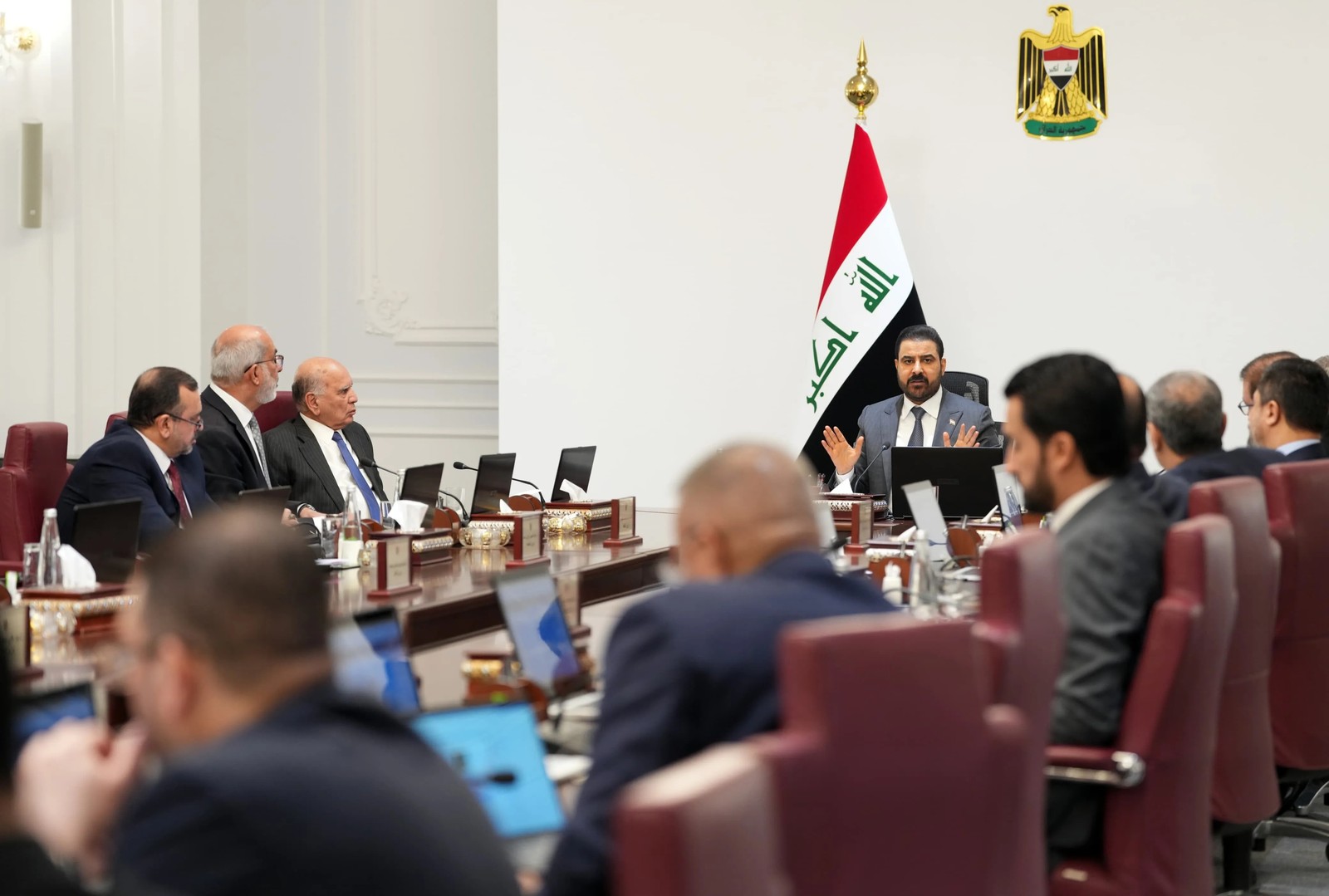
The Council of Ministers, led by Prime Minister Ali Falih Al-Zaidi, convened its regular session, approving a package of significant recommendations for the oil, health, and roads sectors, alongside financial and administrative reform. Al-Zaidi chaired the Council's nineteenth regular session on Wednesday evening. Discussions covered the general situation in the country, and agenda items were deliberated to reach necessary decisions. In the oil sector, the Council approved a recommendation to exempt secondary contracts of oil companies to facilitate their operations, and sanctioned the exemption of the Oil Projects Company from paragraph (First/5) of its decision (40 of 2026). It also amended paragraph (1/a) of its decision (68 of 2026) to define the quantity of black oil for export from local refining as (net production minus the allocation for the Ministry of Electricity). The Council mandated the Ministries of Oil and Electricity to submit a report on the installation results of calibrated measurement meters at power generation unit supply points. It further tasked the Ministries of Oil and Industry and Minerals with studying the industrial sector's black oil needs and its supply feasibility. Under the financial and administrative reform initiative, the Council approved recommendations for public companies and self-funded departments to remit their due share to the public treasury. The Federal Board of Supreme Audit will provide the Ministry of Finance with a statement detailing the treasury's outstanding share from these entities. In the health sector, the Council of Ministers empowered the Ministry of Planning to exempt reputable pharmaceutical and medical supply manufacturers from the financial competency requirement (as stipulated in government tender regulations appended to Public Contracts Instructions 1 of 2025). It also resolved to form a committee from the Ministries of Health and Planning to establish special regulations for the procurement of medicines, sera, vaccines, and medical supplies and devices. Furthermore, companies and factories contracted with the Ministry of Health/State Company for Marketing Drugs and Medical Appliances (Kimadia) were exempted from the financial competency requirement outlined in the Public Contracts Implementation Instructions. To enhance traffic safety, the Council endorsed a recommendation to procure road marking machines and their accessories. This involves the Ministry of Interior issuing a public tender or inviting at least five reputable specialized manufacturers, with specifications meeting the standards of the Central Organization for Standardization and Quality Control.