policy
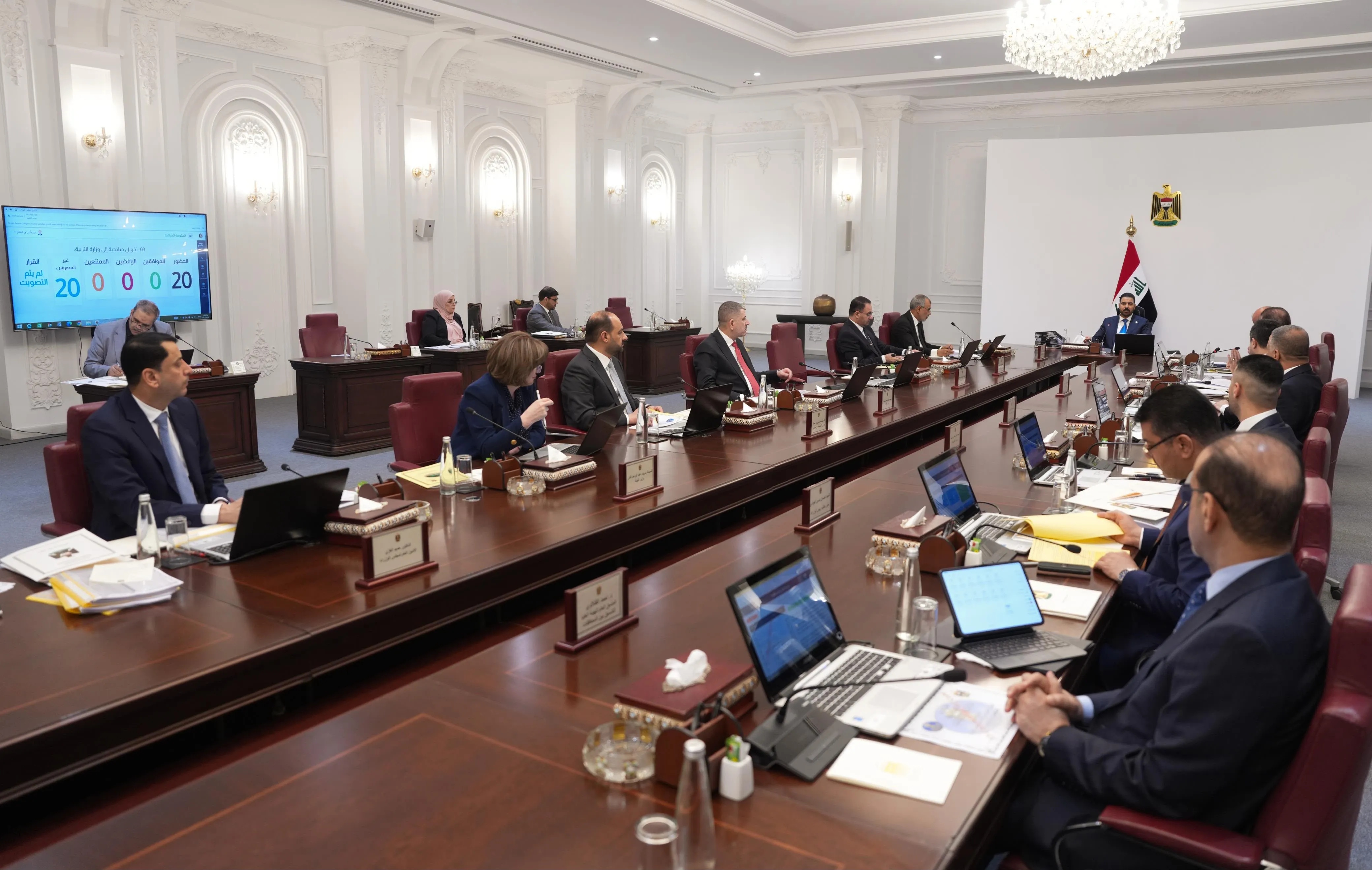
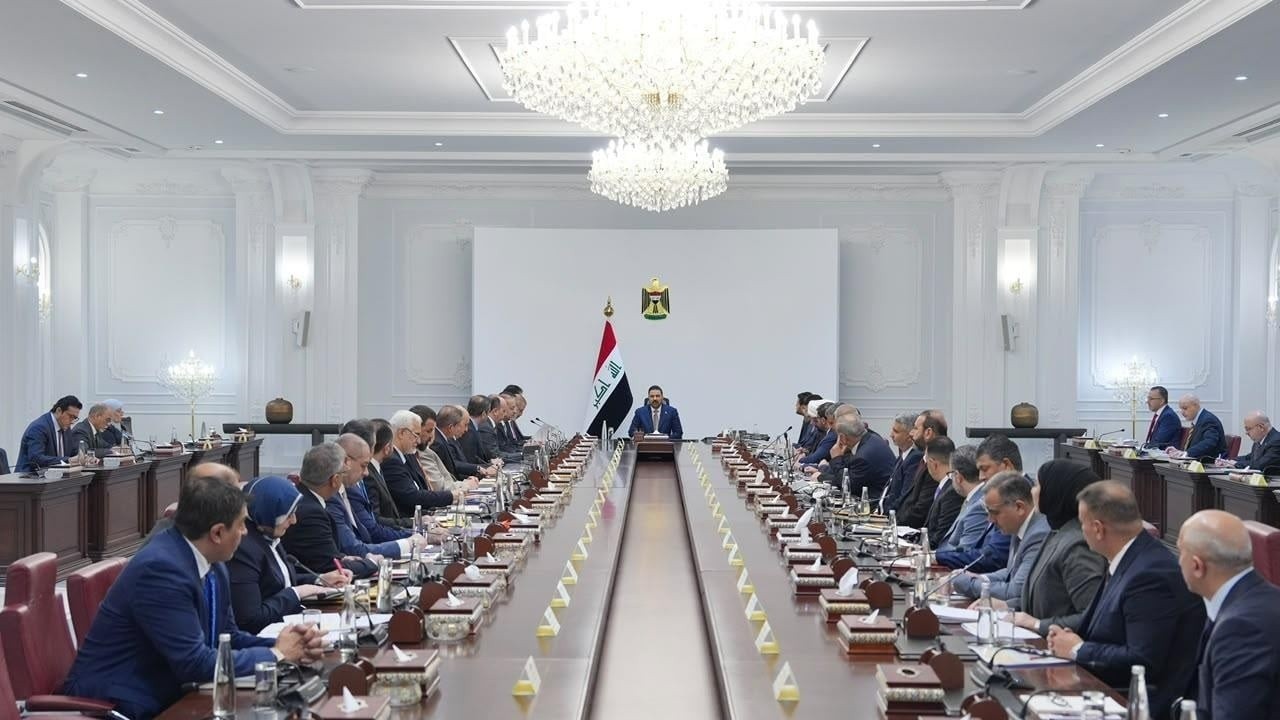
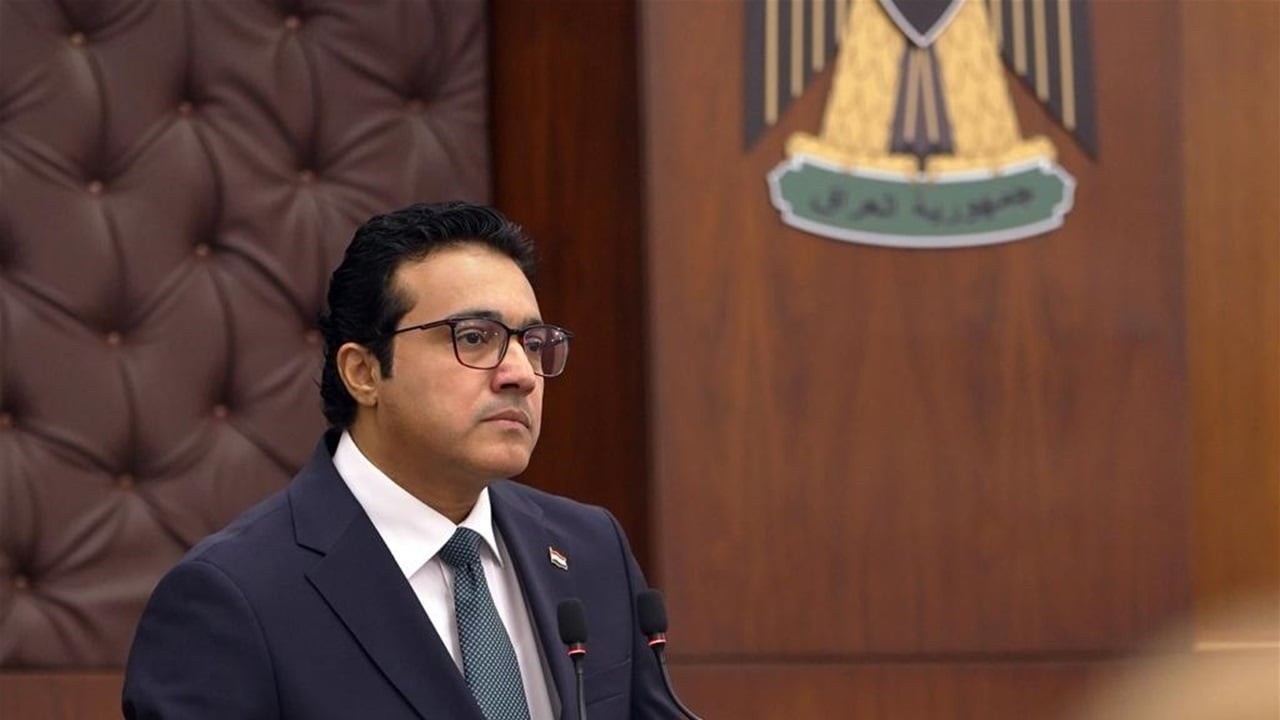
The Council of Ministers issued a package of decisions during its session held on Saturday evening, chaired by Prime Minister Ali Al-Zaidi. These included directives to complete procedures for issuing work permits for foreign labor. The Council also authorized the Ministry of Electricity to sign an agreement for developing the electricity sector with the American company (GE) and approved a public tender for printing school textbooks. In a statement issued by the Prime Minister's Media Office, it was reported that Prime Minister Ali Faleh Al-Zaidi chaired the ninth ordinary session of the Council of Ministers on Saturday. During the session, developments in the country's situation were discussed, and agenda items were reviewed to take necessary directives and decisions. The statement indicated that the Prime Minister, at the outset of the session, directed the Ministries of Interior, Labor, and Social Affairs, in coordination with the National Investment Commission, to complete procedures for issuing work permits for foreign labor, in accordance with the current law and instructions, when granting entry visas. The Council of Ministers also approved the closure of the Labor Office affiliated with the Ministry of Labor and Social Affairs/Department of Labor and Vocational Training at the National Investment Commission's headquarters. This office was responsible for completing work permit issuance procedures, but its need ceased due to the automation of electronic visa procedures. In the context of continuous government efforts to combat corruption, the Council of Ministers approved recommendations from the performance evaluation results of ministries, independent bodies, and governorates. These included: 1. Completing investigative committee work within 60 days. 2. Increasing follow-up with specialized courts to resolve long-standing cases. 3. Following up on collecting amounts ordered by court decisions to be paid to ministries or government entities. 4. Obligating all government entities to address observations in Financial Supervision Bureau reports, ensuring performance improvement, and compelling government institutions to develop guiding manuals and adopt specific programs and manuals to enhance anti-corruption performance. 5. Obligating all government institutions to identify corruption phenomena, and to develop employee efficiency and provide anti-corruption training. To enhance investment planning efficiency, rationalize public spending, and prevent inflation of government project costs due to new components, the following was decided: 1. Creating or adding any new component, activity, phase, event, or expansion to projects listed in the investment plan is prohibited after Ministry of Planning approval. Benefiting entities must implement the project according to the approved scope of work, components, costs, and objectives. 2. Any work not included in the basic project study, its designs, or approved planning documents is considered an independent project, subject to procedures for inclusion, evaluation, prioritization, and allocation according to prevailing legislation and regulations. 3. Exceptions include requirements imposed by public safety, urgent technical needs, or unforeseen legal obligations during project preparation. 4. The Ministry of Planning shall scrutinize amendment or addition requests to ensure they are not used to change project scope, increase cost, split it, exceed investment plan priorities, or merge it in a way that affects planning integrity. 5. The Ministry of Planning shall issue necessary regulations for this decision's implementation; any conflicting text shall be deemed null and void. To improve government project preparation quality and ensure public fund protection, the Council decided to oblige contractual parties to include an explicit clause in study, design, audit, and supervision contracts. This clause holds consulting entities (designers and auditors) fully legally and contractually responsible for any increase in project costs. This measure aims to end financial waste and prevent technical errors in preparing quantity schedules and surveys. The Ministry of Planning will develop a unified mechanism to measure deviations between estimated, contractual, and final government project costs, identify causes, and determine responsibilities, submitting an annual report to the Council of Ministers detailing responsible entities and actions taken. Regarding electricity, the Council of Ministers, according to the statement, approved authorizing the Ministry of Electricity to sign an agreement for implementing a comprehensive plan to secure Iraq's energy and develop the electricity sector (generation and transmission) with the American company (GE). This agreement will come into effect simultaneously with the framework agreement intended between Iraq and the United States, after both parties sign it, and will terminate upon final contract conclusion. In efforts to develop the oil sector, the Council approved signing an agreement between the Ministry of Oil, represented by Basra Oil Company and North Oil Company, and the American company (Chevron). This agreement includes advance payment, crude oil supply, and a letter of guarantee, aiming to increase production. The Council also approved Basra Oil Company's signing of a Heads of Agreement (HOA) and a Non-Disclosure Agreement (NDA) with a consortium comprising (the American company Capital TI, the Qatari company UCC, and the American company Chevron), with the possibility of adding a public company to this consortium. This aims to proceed with the following strategic routes and projects: * Strategic export pipeline (Basra - Haditha - Kirkuk - Ceyhan). * Export pipeline (Basra - Haditha – Baniyas). This enables the consortium to commence integrated technical and financial studies and plans, and to choose between these vital routes, without incurring any final financial or contractual obligations on the Ministry of Oil. To enhance oil export flexibility, the tender for consulting services for the Basra-Haditha crude oil export pipeline project was approved for exemption from the general contracts implementation instructions (No. 1 of 2025). This enables the Basra Oil Company to proceed with allocation and contracting procedures with (KBR) for providing project consulting services. In a related context, the Council approved adding 25,000 barrels of crude oil to the Iraqi-Chinese agreement and opening a special account to ensure the fulfillment and settlement of Iraqi financial obligations. This decision aims to maintain Iraq's credit standing and ensure continued project funding from the Chinese side. In the education sector, the Council of Ministers approved authorizing the Ministry of Education to announce a public tender for printing school textbooks in cooperation with reputable local and foreign companies, in coordination with the Ministry of Finance for necessary funding. The Council also tasked Al-Nahrain General Company for Printing and Producing Educational Supplies and School Textbooks, authorizing it to enter into contractual commitments with governmental and private printing presses to meet remaining title needs as soon as financial allocations are available. The Council also approved the Ministry of Planning's loan of 1760 tablet devices, used in the general population and housing census, to the General Real Estate Registration Department. These devices will be used for entering data related to the project of establishing a database for property owners.