

Technology
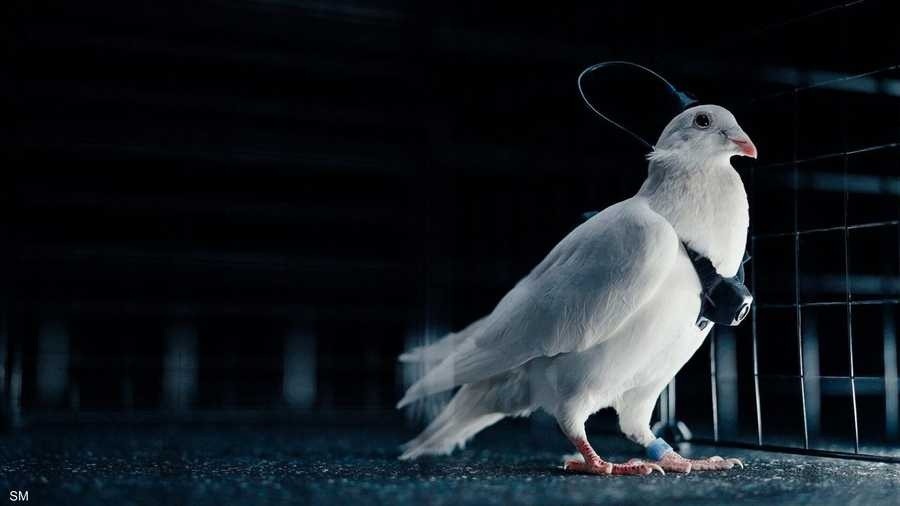
A Russian company specializing in neural technology has launched a new commercial service utilizing pigeons implanted with electrical electrodes in their brains, allowing remote control over their flight direction. This innovation marks a significant advancement in integrating technology with living organisms, enabling control of the birds over distances exceeding 100 kilometers. The company reported that the pigeons have completed over 100 flights outside the laboratory, capturing more than a thousand aerial photographs, with the longest recorded flight lasting over ten hours. The technology involves implanting biocompatible electrodes in the bird's brain, connected to small electronic devices carried on its back, along with a camera mounted on its chest for aerial imaging. Flight control is achieved through direct electrical stimulation of the brain, eliminating the need for traditional training methods. The birds respond to commands such as takeoff, landing, and altitude adjustment, although full control over all movements is not guaranteed under all conditions. The company leverages the pigeons' natural abilities in flight, navigation, and obstacle avoidance—features that drone engineers strive to replicate using sensors and artificial intelligence. Additionally, the birds rely on their biological energy, allowing longer flight durations compared to electric drones limited by battery capacity. Services offered include monitoring power lines, oil and gas pipelines, urban infrastructure, and environmental surveillance, with costs starting at 300,000 Russian rubles per square kilometer, comparable to traditional drone services. However, challenges exist regarding the birds' health care, natural behavior, and consistent responsiveness to commands, and the economic viability of this technology has yet to undergo independent evaluation. Historically, animals have been employed in military and intelligence roles, such as carrier pigeons in the World Wars for message delivery, dogs for guarding and search and rescue, and dolphins for mine detection. This current project differs by directly influencing animal behavior through electrical brain stimulation rather than relying solely on training. Although the service is intended for civilian use, the technology raises security and legal concerns related to privacy and potential applications in surveillance or intelligence gathering for military or security purposes. The company asserts it protects individuals' privacy by employing artificial intelligence to blur faces in the images captured. The project also sparks ethical debates about surgical intervention in living brains to perform tasks dictated by humans, raising questions about the effects on the birds' health and natural behavior, and whether these procedures cause pain or stress over time. The company claims adherence to ethical protocols, yet independent scientific assessments are needed. This initiative represents a novel direction in merging technology with living beings, prompting questions about the ethical and technical boundaries of such innovation, as humanity moves from developing machines that mimic living creatures to integrating technology within the creatures themselves.