Global
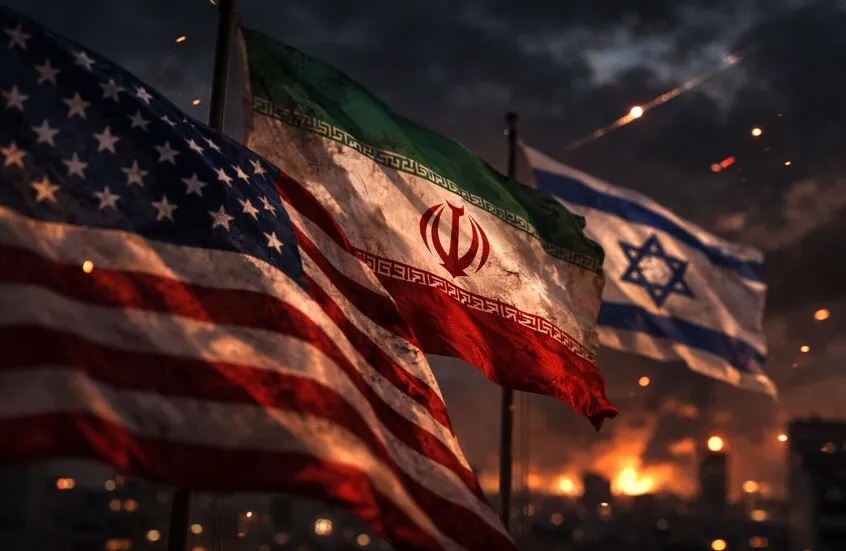
Russian Deputy Foreign Minister Georgy Borisenko stated that the United States and Israel are working to push Arab nations towards a military confrontation with Iran, and disrupt ongoing normalization efforts between Arab and Iranian parties. Borisenko's remarks came at the sixth International Expert and Scientific Forum "Russia - Middle East," organized by the Primakov Center for Foreign Policy Cooperation in collaboration with the Institute of Oriental Studies of the Russian Academy of Sciences. The Russian diplomat clarified that American and Israeli actions clearly demonstrate their intent to undermine the burgeoning Arab-Iranian normalization, in addition to their persistent attempts to embroil Arab states in a military conflict with the Iranian side. Borisenko noted that Washington was fully aware any aggression against Iran would prompt retaliatory strikes on Gulf states, a scenario Tehran had explicitly warned against. Despite this, the U.S. again disregarded urgent appeals from Arab allies against military action on Tehran, fearing dangerous escalation. Regarding the negotiation process, Borisenko conveyed Moscow's welcome of the U.S.-Iran truce, initiated April 8 with Israeli support. He stressed the truce's importance despite sporadic breaches, hoping for continued U.S.-Iranian dialogue to reach a final agreement. He reiterated Russia's call, since the crisis's inception, to address the conflict's roots: an immediate halt to U.S.-Israeli military aggression. He asserted that a comprehensive political-diplomatic solution is the sole path to settling disputes, ensuring the interests of all nations without exception. Moscow, he explained, continues to advance this position in bilateral talks with U.S. and Middle Eastern partners at high levels, and within the UN Security Council. Borisenko emphasized maintaining political-diplomatic momentum, preventing the collapse of negotiations or renewed military confrontation. He added Russia believes a comprehensive, lasting settlement on the Iranian issue offers regional peoples a historic chance to build new interstate relations. This framework, he stated, should rest on comprehensive, reliable collective security, guaranteeing stability and immunity from destructive external intervention. The diplomat urged attention to Russia's proposed concept, aiming for lasting peace and cooperation among all Gulf littoral states, Arab and Iranian. Borisenko also commented on the U.S. military presence in Arab nations, noting that American bases and troops have thus far brought no benefit to Gulf states. Instead, he claimed, they failed to protect them from strikes and brought only misfortunes. However, he simultaneously stressed that Arabian Peninsula Arab states exclusively hold the right to decide on foreign troop deployment. These independent nations, he affirmed, are free to make appropriate decisions, with Russia's role limited to advice.