policy
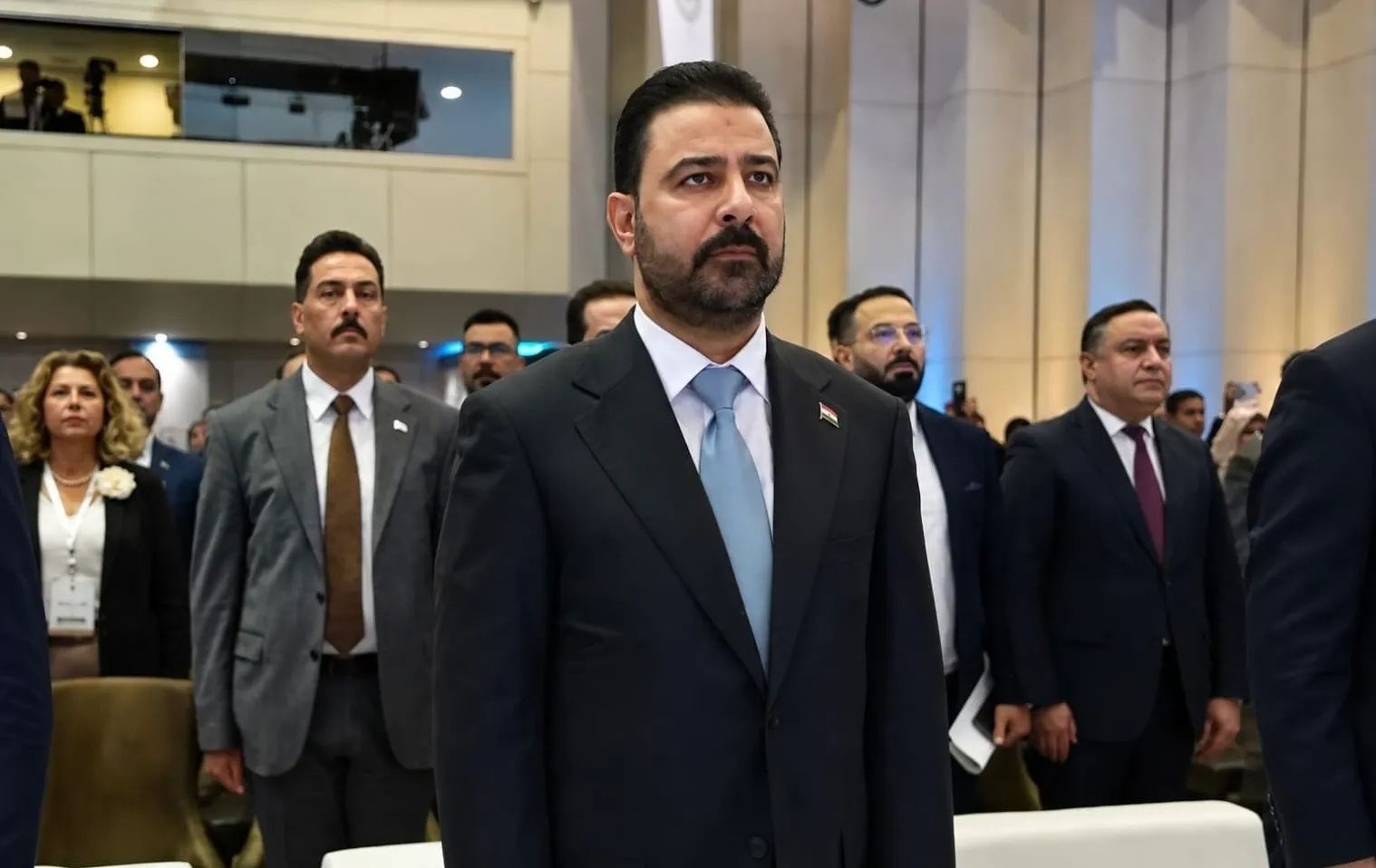
Prime Minister Ali Al-Zaidi, on Friday, ruled out the existence of any intentions or possibilities for a military confrontation. Speaking at the eighth Baghdad Dialogue Conference, Al-Zaidi stated that "all political forces are in complete agreement on the path of confining arms to the state, and work is underway to establish mechanisms for arms handover and completely end this situation." He added: "There are no intentions or possibilities for any military confrontation, and we will not allow Iraq's enemies to exploit any opportunity to destabilize it." Al-Zaidi affirmed that "Iraq is going through a difficult period," noting that the government "possesses more than one solution to the economic problems facing the country." He explained that "the government is working to activate border crossings and develop solutions for economic challenges," pointing out that "the closure of the Strait of Hormuz represents a significant challenge." He further added that "the budget draft will be sent soon," confirming "the existence of reform plans to address current economic challenges." Al-Zaidi clarified that "the government has multiple solutions to the economic problems facing the country and is working to take necessary measures to deal with current circumstances and maintain the stability of the Iraqi economy." He indicated that "the government has managed to secure salaries and find alternative routes for oil export," emphasizing that "the upcoming budget will serve as a roadmap for Iraq's economic future." Regarding the budget, he explained that it "will focus on the electricity sector in production, distribution, and transmission, in addition to expanding the use of solar energy." He noted that "the government has implemented reforms in handling domestic fuel consumption according to a new economic model that achieves financial savings of 17.8 trillion dinars over a full year." Al-Zaidi stressed that "the government is not backing down from fighting corruption," indicating that it "enjoys broad support from various political forces." He stated that "employees' salaries and government payments are secured, and the government is moving forward with a plan to cover future years' needs." He added that "the government is working to expand oil exports through the Turkish Ceyhan port, alongside efforts to export via Baniyas and Aqaba." He pointed out that "Iraq is working to increase its export quota within OPEC and aims to reach 8-10 million barrels per day within the next six years." Al-Zaidi affirmed that "Iraq fought ISIS terrorism on behalf of the region and the world," considering it "fair for Iraq to receive an oil export quota commensurate with its population size and oil reserves." He stated: "We are not thinking about building a government as much as we are thinking about building the state and the economy," emphasizing that "Iraq possesses opportunities, assets, and the will to overcome all challenges." He added that he "has committed himself not to run for a second term, and that the reform programs will yield results under future governments." He noted that "the Development Fund will have a capital of 100 billion dollars, and its funding will rely on contributions from the Central Bank and public subscription, in addition to contributions from international and regional financing institutions." He stressed that "if the private sector is not supported, there will be no real development," pointing to "efforts to establish mechanisms that encourage migration from the public to the private sector." He concluded that "the government has supported transforming Iraq's role from an arena of conflict to a bridge for negotiation and understanding," asserting that "Iraq's weight is influential and decisive in regional stability." He added that "the project for one million residential land plots will materialize very soon, and the government targets citizens who do not own any real estate or residential land." Al-Zaidi confirmed that "the last citizen will receive their plot within the project in less than three years." He emphasized that "the presence of arms outside the state's framework will create an environment that deters investment," affirming that "this is unacceptable and not in the interest of Iraqis." He added that "the National Investment Commission will announce opportunities for residential land plots according to a modern contemporary design that accounts for future expansion." He explained that "the government has directed the development of a plan to provide agricultural land plots for agricultural engineers and veterinarians near transport routes, along with providing them with loans based on a studied economic model." He indicated that "tax revenues will be collected in advance for imports with the opening of transfers, which will generate revenue for the state, with the possibility of recovering funds if the import operation does not proceed." He clarified that "the government has reduced customs duties on some goods to facilitate the correct path for revenue payment to the state by traders." Al-Zaidi asserted that "the ex-post audit method is no longer suitable," pointing out that "the root of corruption is the exaggeration in pricing contract items and projects; therefore, the government adopted pre-audit and controlled price moderation before signing contracts." He said that "Iraq is an important country in the region, and it cannot sever ties with its Arab and regional surroundings," noting "a strong desire for openness towards Iraq." Al-Zaidi concluded by affirming that "Iraq is heading towards becoming the most stable and strongest country in development and economy."