policy
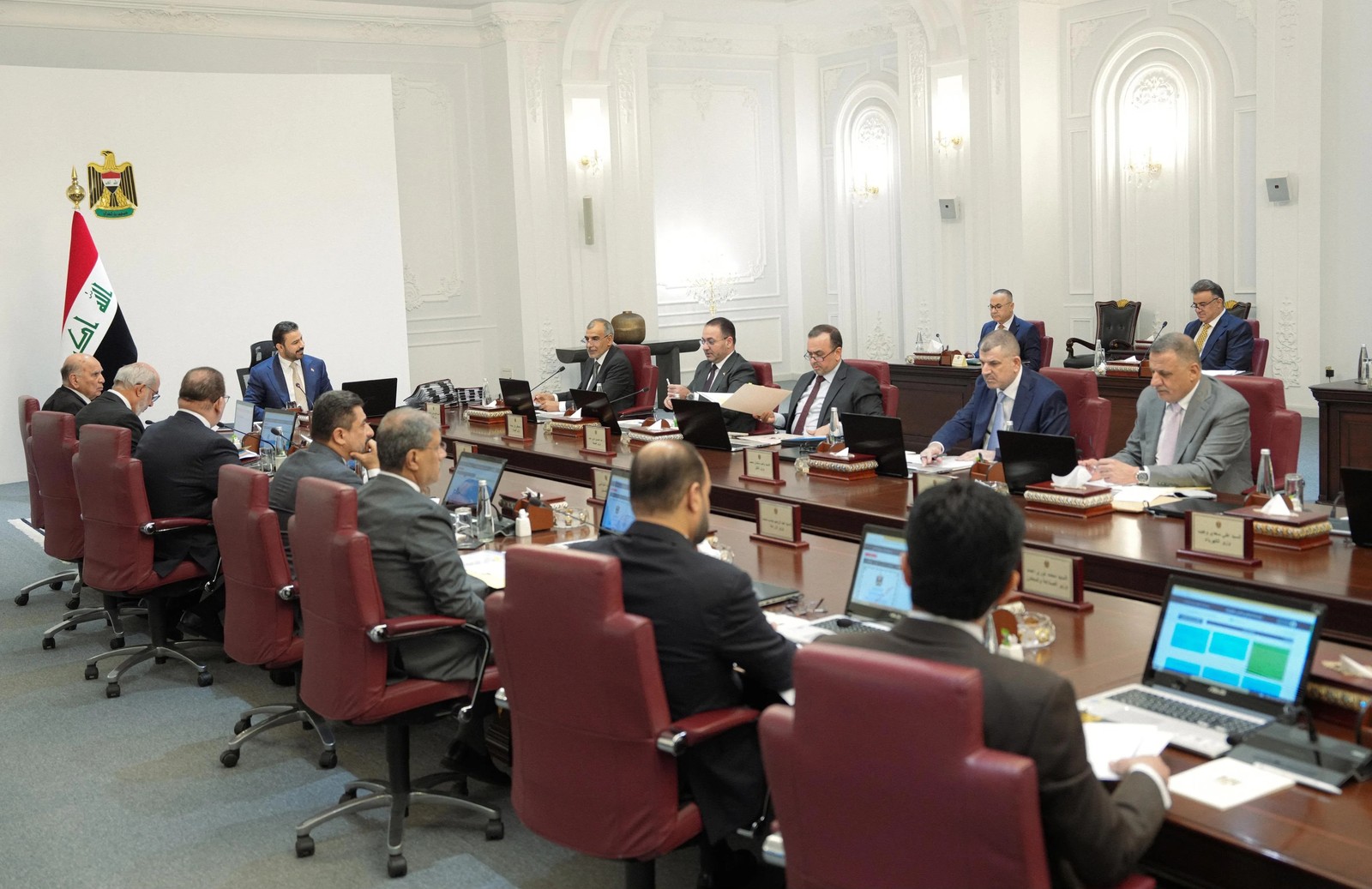
The Council of Ministers convened its regular session today, Tuesday, chaired by Prime Minister Ali Faleh Al-Zaidi, and approved a series of crucial decisions including the suspension of external delegations for state employees, the determination of crude oil export volumes to Turkey, in addition to amending vital oil agreements, and approving other draft laws and regulations. A statement issued by the Prime Minister's Media Office clarified that Al-Zaidi presided over the eighteenth session of the Council of Ministers, which discussed developments in the country, reviewed agenda items, and adopted the necessary decisions. Within the framework of measures aimed at controlling expenditures and enhancing oil export capabilities, the Council approved halting all external delegations for state employees, whether centrally or self-funded. Delegation approval was restricted to the relevant minister for extreme cases only, with a 60% reduction in delegation allocations in the general budget, sub-budgets, and through transfers from other chapters, with the exception of the Ministry of Foreign Affairs. It also endorsed an amendment to its decision No. 388 of 2026 concerning the water framework agreement with Turkey, setting crude oil export volumes to the Turkish side at no more than 33,000 barrels per day as an initial phase, within the actual funding needs of the agreement mechanism. The Council further approved an amendment to its decision No. 165 of 2026 regarding the mechanism for selling crude oil and petroleum products, to ensure its continued implementation until the current crisis ends and navigation in the Strait of Hormuz returns to normal. In the context of regulating contractual obligations, approval was also granted for amending decision No. 348 of 2026 to include the signing of agreements between the Ministry of Oil and the American company Chevron, within the framework of advance payment agreements, crude oil supply, and technical consultation. In terms of financial support, the Council of Ministers approved the Ministry of Finance providing the Ministry of Oil with financial allocations for centrally funded ministries and official bodies. The Ministry of Oil will then handle monthly supplies according to the specific allocation for each spending unit. To enhance medical services, the Council approved the extension of specialized import approvals, as stated in a letter from the Ministry of Health, provided that the extension does not exceed the end of the current year. In a move to address the repercussions of the former regime's decisions, the Council of Ministers approved a draft law to repeal Resolution No. 110 of February 21, 1989, issued by the dissolved Revolutionary Command Council, which was previously reviewed by the State Council and referred to the Parliament. To bolster Iraq's international commitments, the Council approved the issuance of a ship tonnage system, which was reviewed by the State Council, based on the provisions of the Constitution and Law No. 18 of 2019 of the Iraqi Higher Maritime Authority. Finally, as part of the government's efforts to strengthen international relations, approval was granted to authorize the Minister of Trade to negotiate and sign a draft agreement for economic, commercial, scientific, technical, and cultural cooperation between Iraq and Serbia.