
Eco
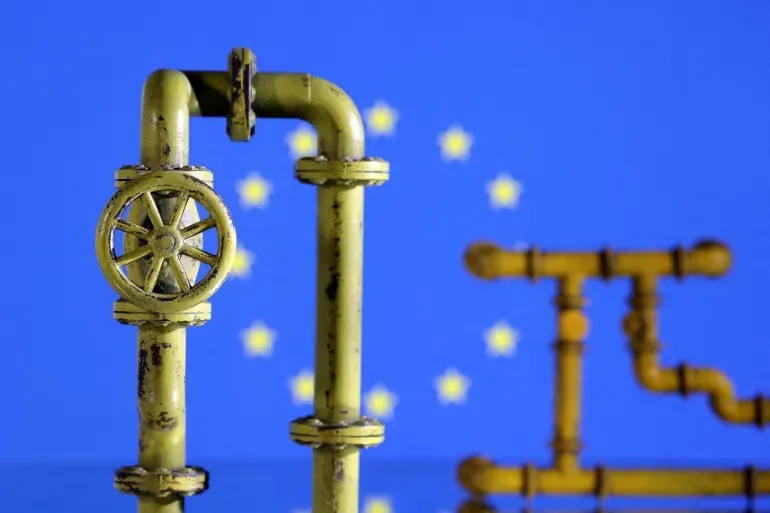
European nations face a growing challenge in refilling their natural gas reserves ahead of winter. This is exacerbated by intense global competition for liquefied natural gas (LNG) shipments and renewed disruptions in the Strait of Hormuz, hindering Europe's initial plan to postpone purchases in hopes of resuming Qatari supplies via the strait. After the last winter, European governments and energy companies gambled on delaying gas purchases, despite inventories reaching their lowest levels since 2022. This bet followed high prices driven by escalating geopolitical tensions and disruptions to navigation in the Strait of Hormuz, prompting market players to await a diplomatic breakthrough that would restore normal shipping traffic through the strait, which handles approximately one-fifth of global LNG trade. However, after nearly five months, those bets have become riskier, as shipping disruptions persist and military tensions escalate again, while gas prices have surged to nearly their initial levels at the onset of these tensions. Amid Europe's slower pace of storage, major Asian countries such as China, Pakistan, India, Bangladesh, Japan, South Korea, and Taiwan swiftly moved to purchase spot shipments to offset the decline in Qatari supplies, redirecting a significant portion of available shipments away from the European market. Specialized vessel tracking data showed that Europe's LNG imports decreased by approximately 27% compared to the same period last year, based on a thirty-day moving average, while Asian imports recorded a significant increase. Alex Siow, a senior gas analyst at an independent commodity intelligence firm, indicated that time is running out for the European Union to achieve its target, asserting that the continent will be forced to accelerate its purchases. Anders Opedal, CEO of a major Norwegian gas supplier to Europe, believes the continent may not be able to raise its reserves beyond 80% before winter, due to the tight market and intensifying competition with Asian buyers. Opedal added that lower storage levels will make Europe more vulnerable to price fluctuations during winter compared to previous years. According to data from a European platform specialized in gas infrastructure, the EU's gas reserves currently stand at about 54% of its capacity, compared to a five-year average of approximately 70%. This level is below the EU's target of 80% by November 1st. Researchers believe Europe needed to receive LNG shipments at the same rate recorded last year to achieve this goal, but increasing Asian competition has reduced flows to the continent. The scarcity of supplies directly impacted prices, as spot LNG prices in Northeast Asia rose for the fifth consecutive week, reaching approximately $22 per million British thermal units for September delivery, marking a four-month high. LNG prices in Northwest Europe also reached about $20.36 per million British thermal units, at a time when analysts described the market as still very tight amid ongoing geopolitical risks. A firm specialized in monitoring and analyzing commodity markets and maritime shipping data raised its forecast for the average Asian benchmark index during the second half of 2026 to $19.5 per million British thermal units, compared to a previous forecast of $14.6. This index is a global reference for LNG prices in the Northeast Asian region. An advisory firm warned that the continued closure of the Strait of Hormuz until the end of September could lead to a sharp rise in gas and electricity prices, potentially pushing the economies of the United Kingdom and Europe into recession by year-end. An economist at the same firm stated that European buyers are now forced to purchase gas at the high prices they had avoided months ago, otherwise they will face supply shortages this winter. The head of continental Europe trading at a Swiss company also cautioned that ongoing disruptions in Hormuz make Europe more susceptible to cold weather shocks, similar to what occurred in January and February of last year. These pressures coincide with the European Union's ongoing plan to end Russian LNG imports by January 2027, noting that Russian gas constituted approximately 17% of Europe's imports during the first half of the current year. In Germany, the government continues to refuse direct intervention to support gas purchases, believing the market can address the crisis, while countries like Italy and the Netherlands have begun offering limited support. This portends additional intra-European competition for available shipments. Analysts warn that the continent overcame a similar crisis in winter 2022 thanks to mild temperatures, but relying on another warm winter is not a safe strategy, especially with declining inventories and increasing global competition for LNG.