
Global
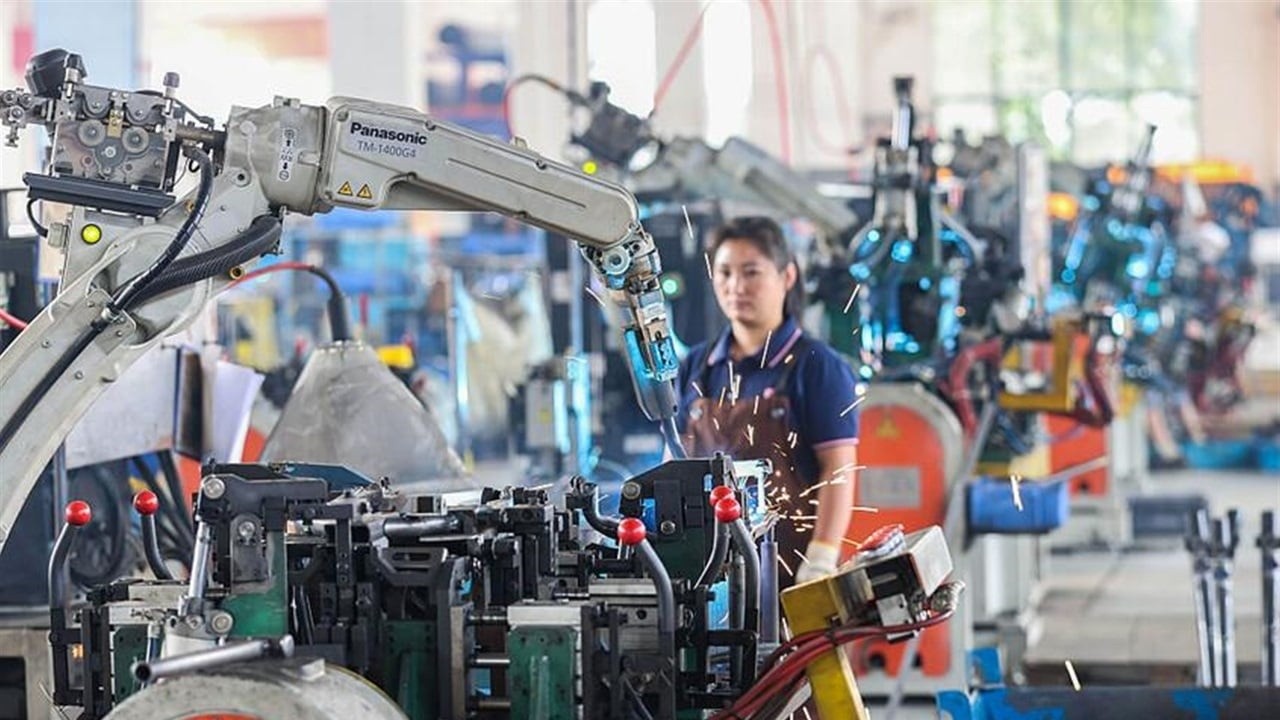
Official data released on Saturday revealed a contraction in China's manufacturing activity during October, marking the third decline in four months. The official manufacturing Purchasing Managers' Index (PMI) fell to 49.3 points in October, down from 50.1 in September, below the Reuters survey expectation of 50 points, the threshold separating expansion from contraction. The first month of each quarter typically experiences a relative slowdown. This slowdown is attributed to weak domestic demand for goods and early signs of a slowdown in export momentum, prompting economists to call for broader government intervention to support growth. Zhang Lichun, an analyst at the China Federation of Logistics and Purchasing, warned that insufficient demand is increasing economic pressures, urging intensified stimulus efforts to offset the prolonged slump in consumer spending that exports alone can no longer compensate. Although China's trade surplus is set to surpass last year's $1.2 trillion level due to strong exports, October saw a noticeable slowdown in foreign orders, especially those related to the Christmas season, which were shipped in advance during September. Domestic activity was also affected by the fading momentum of consumer spending, which saw a temporary rise during the National Day holiday in early October before returning to recession, pushing sub-indices for new orders, production, and purchases into contraction territory. Despite the overall negative picture, performance varied across sectors, with advanced manufacturing and high-tech sectors maintaining positive momentum. Sub-indices for production and new orders in railways, shipbuilding, aerospace equipment, and electronics and communications industries registered levels at or above 53 points, with strong growth in profits for companies linked to artificial intelligence technologies. Conversely, traditional industrial firms and the real estate sector continue to struggle with sluggish domestic markets and rising costs, widening the gap between old and new sectors in China's industrial structure. Despite these sectoral challenges, analysts expect China's economy to meet its annual growth target of 4.5% to 5% without necessarily requiring additional stimulus packages, supported by the recovery seen in the third quarter, which recorded 4.5% growth compared to 4.3% in the second quarter.