
Eco
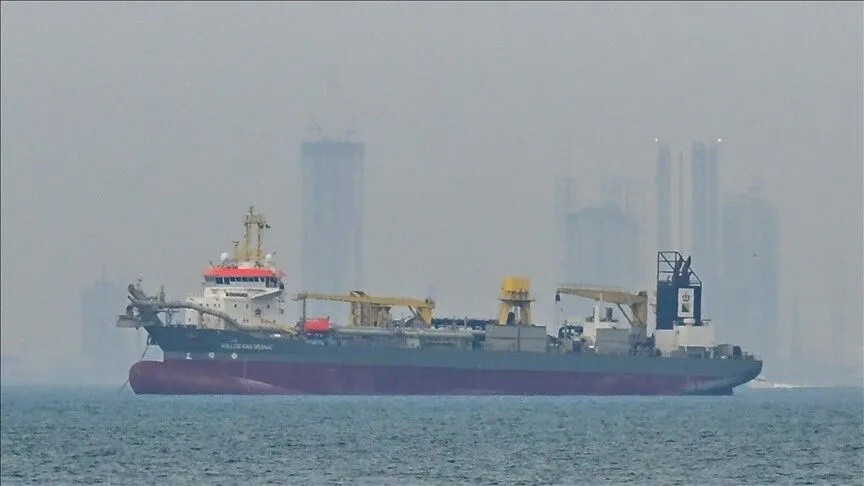
The United Nations Conference on Trade and Development reported that war risk costs for oil tankers surged between 100 and 900 percent within a few days compared to levels before navigation disruptions in the Strait of Hormuz. This was highlighted in a report on global maritime trade amid ongoing supply and trade disturbances caused by the US-Israeli conflict with Iran. According to the report, war risk costs for an oil tanker valued at $100 million jumped from about $200,000 to $1 million per voyage following the unrest in the Strait of Hormuz. The report noted that container shipping lines imposed emergency surcharges to cover war risks and fuel costs, addressing rising operational expenses. The UN agency stated that maritime trade, a cornerstone of the global economy, continues to slow down, with conflicts and climate-related factors hitting least developed countries and small island nations hardest. It was reported that the total volume of goods transported by sea reached 12.3 billion tons in 2025, but growth slowed to 1.9 percent, half the rate recorded in 2024. The report added, "With at least four vital sea routes—the Strait of Hormuz, Red Sea, Black Sea, and Panama Canal—under simultaneous pressure this year, the agency expects no growth in 2026, followed by a 3.2 percent recovery in 2027." More than 80 percent of global traded goods, including food and fuel essential to countries, are transported by sea. The report explained that rerouting ships ensures continued cargo flow but lengthens voyages and raises costs, especially for smaller economies. Trade volumes are expected to see no growth this year, while distances traveled are projected to increase by 1.5 percent. The report warned that high shipping costs alone could cause consumer goods prices in least developed countries to rise up to twice the global average if the current "fuel shock" persists through 2027. In February, the US and Israel launched a new war against Iran, which responded with missile attacks amid disruptions to navigation and energy supplies in the Gulf and Strait of Hormuz. In June, Washington and Tehran signed a framework memorandum to halt military operations and begin negotiations covering the nuclear file, navigation in the Strait, and sanctions relief. However, confrontations resumed in July due to stalled implementation of agreements and ongoing disputes over navigation security in the Strait of Hormuz, with Washington reinstating its naval blockade on Iran.