policy
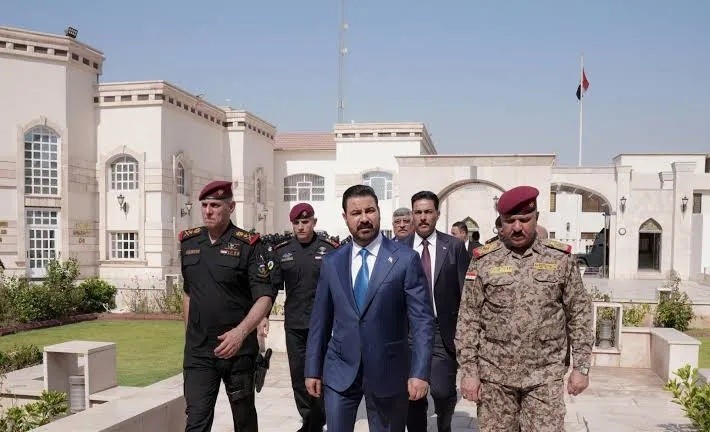
Prime Minister and Commander-in-Chief of the Armed Forces, Ali Faleh Al-Zaidi, announced on Wednesday morning the official conclusion of the international coalition's mission to combat ISIS in Iraq. Al-Zaidi sponsored the official ceremony held by the office of the Commander-in-Chief of the Armed Forces in the capital, Baghdad, on the occasion of Sovereignty Day on September 30, 2026, and the end of the missions of the international coalition forces to fight ISIS in Iraq, in the presence of the coalition commander and leaders of various military branches and security formations. The Commander-in-Chief of the Armed Forces confirmed in a speech delivered on the occasion the official end of the international coalition's mission to fight ISIS, explaining that Iraq is reaping today the fruits of immense sacrifices and heroic efforts that spanned for years, until our security agencies of various branches extended their control over the security and field landscape throughout the country. Al-Zaidi recalled the thirtieth of September 2026 with an image that will remain present in memory; the image of our people defending their land, cities, and towns defiled by terrorists, adding that declaring the end of the international coalition's mission to fight ISIS proves that cooperation between friendly forces and friendly peoples has yielded a victory over one of the darkest pages of extremism and brutality in history. He indicated that the uprising of the people alongside the armed forces formed a starting point for a phase in which our forces reorganized command systems, managed to mobilize resources, unify efforts, and seize the initiative, pointing out that friendly countries extended a helping hand to Iraq in that decisive confrontation, and our armed forces successfully reorganized their ranks and armament, while the Joint Operations Command represented throughout the years of the war on terrorism the heart of coordination and the mind that gathers information and initiates planning and leadership within a major national battle. He expressed thanks and appreciation to all friendly countries participating in the international coalition, and to its leaders, officers, trainers, and advisors who worked alongside the security forces, pointing out that the end of the international coalition's mission does not mean the end of the battle against terrorism, but rather represents Iraq's transition to a phase in which it assumes full responsibility for its security and stability. He stressed that the transfer of the Joint Operations Command's tasks to the office of the Commander-in-Chief of the Armed Forces embodies an institutional formula to manage this effort under the authority of the state and its supreme leadership, pointing out that a new phase has begun whose title is the sovereignty of Iraq, the strength of its institutions, the readiness of its forces, the unity of its decision, and balanced partnerships with its friends. He continued that security cooperation remains an open path with friends from the international coalition and will be more effective and focused, witnessing the employment of technology and digital techniques in serving goals supporting security and stability. He concluded by saying that the mission has ended in victory, and the responsibility of protecting this victory falls today upon everyone, stressing that there is no weapon outside the umbrella of the law and no force outside the institutions of the state, in accordance with the constitution, what our judicious religious authority called for, and what our people want.