Global
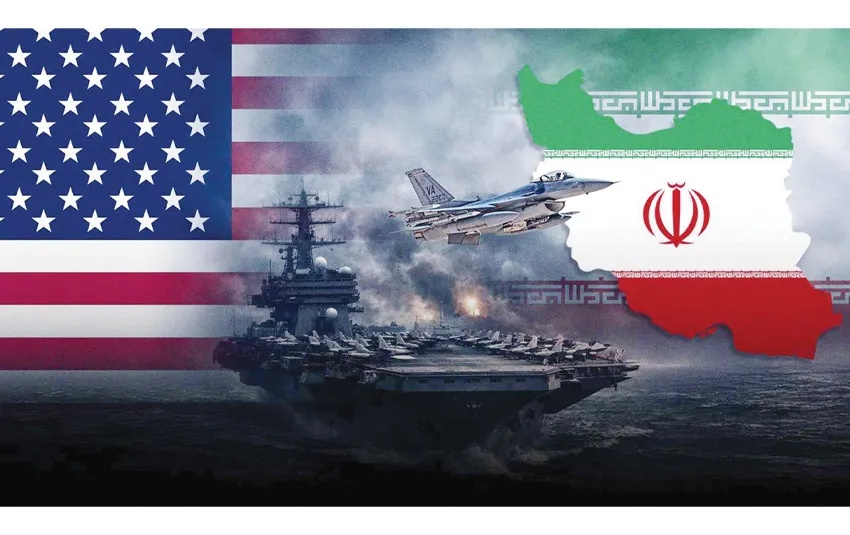
The United States and Iran are reportedly nearing a wider military confrontation, following the killing of two American soldiers in an Iranian missile attack targeting a military base in Jordan. This incident prompted Washington to respond with strikes on Iranian military sites, in an escalation threatening to undermine efforts to contain the conflict ongoing for over four months, according to a report by The New York Times. The missile attack on a U.S. base in Jordan on Friday resulted in the death of two American soldiers and injuries to others, with a third soldier still missing. This marks the first attack to cause U.S. fatalities from "hostile" fire since the collapse of the latest truce with Iran, raising the total number of U.S. military deaths to 16 since the war began. According to the report, the recent Iranian attack was the fourth against Jordan in five days, underscoring the Kingdom's increasing strategic importance as a key host nation for U.S. forces in the region. The U.S. military announced on Sunday that it had launched strikes on Iranian coastal surveillance facilities, air defenses, and Revolutionary Guard sites, holding them responsible for the Jordanian attack. In response, Iran launched attacks on Kuwait and Bahrain. The Kuwaiti government reported that an oil facility, a power plant, and a water treatment station were attacked, while Bahraini television announced that its air defense systems had intercepted and destroyed Iranian aerial aggressions over the Kingdom's airspace. U.S. Secretary of Defense, Pete Hegseth, stated that the killing of the two soldiers "will only increase our resolve," yet these latest developments place President Donald Trump before a growing dilemma regarding the management of the war that began in cooperation with Israel more than four months ago, according to The New York Times. Trump had repeatedly pledged a short and decisive military campaign, but the war has extended for months, causing disruption in global energy markets, and has not yet succeeded in compelling Iran to abandon its nuclear program. With expanding attacks, no diplomatic efforts to end the fighting are evident. Trump had hinted at targeting Iranian civilian infrastructure to pressure Tehran for a peace deal, which Iran warned could be a "war crime." Iranian officials confirmed any targeting of civilian infrastructure would be met with similar retaliation on facilities in neighboring states hosting U.S. bases. Iranian Supreme Leader, Mojtaba Khamenei, reiterated accusations of U.S. violation of the June ceasefire, labeling Trump's agreement "worthless and void," as per official Iranian media. The memo aimed to end the war (started by a U.S.-Israeli attack on Iran) by solidifying the April ceasefire and negotiating a final agreement within 60 days. According to the Iranian Health Ministry, U.S. strikes since June 27 killed at least 50 and injured over 500. Simultaneously, naval incidents persist in the Strait of Hormuz; despite its reopening being a key outcome of the June 17 MoU, navigation has become nearly halted again. Conversely, the U.S. re-imposed its blockade on Iranian ports, having lifted it after the MoU's signing.